

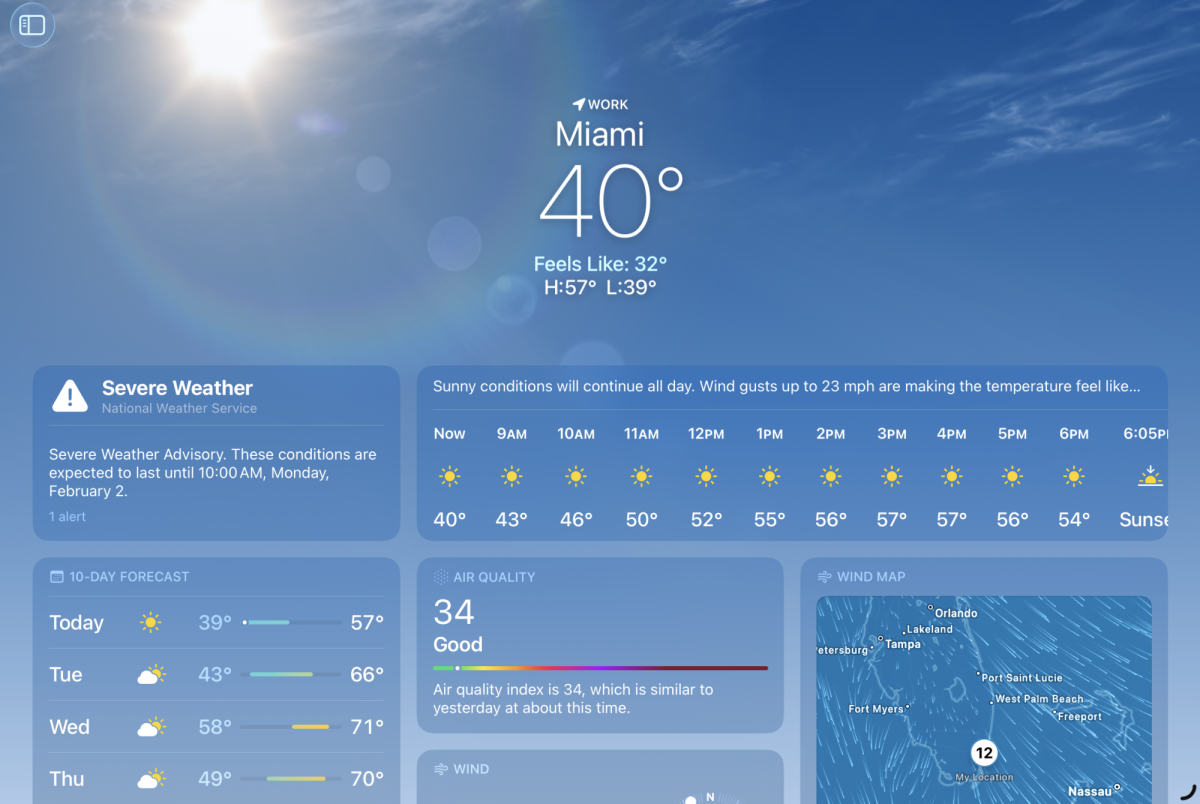
A powerful winter storm sweeping across the United States has brought dangerous cold and heavy snow to most of the country, impacting millions from the Midwest to the Northeast. While South Florida has avoided the most severe effects, the storm’s reach has still been felt locally through colder-than-usual temperatures
States such as New York, Pennsylvania, Ohio, and parts of the Southeast have been hit the hardest. Some areas reported over a foot of snow, while others experienced ice buildup and subzero wind chills, creating hazardous travel conditions. Thousands of flights were canceled, highways were shut down, and power outages left many residents without heat during dangerously cold nights.
Meteorologists say the storm was increased by a dip in the polar vortex, which allows Arctic air to move farther south than usual. Regions not used to winter weather, including parts of the southern United States, struggled to keep up with icy roads and frozen structures.
Sophomore Isabella Studenski noticed.
“I have soccer and the cold weather has affected me in the way that it’s harder to breathe and I get colder and it’s hard to run. It’s a harder competition rather than when I’m just hot and I’m sweating.“
In Miami and South Florida, the experience has been very different. While snow and ice have remained in the north, Miami residents noticed cooler mornings and lower daytime temperatures than usual for this time of year. Jackets and hoodies made rare appearances at ILS as temperatures dipped into the 50s, a large difference to the freezing conditions in other places.
The storm has also opened up larger conversations about preparedness and climate patterns, as extreme weather events continue to affect unexpected regions. Experts emphasize that even areas spared from the worst conditions can feel indirect impacts through travel delays, supply chain issues, and shifting weather norms.
“I’m not used to waking up and actually feeling cold in Miami. I had to wear multiple layers to school, which never really happens,” said sophomore Juan Himiob.
Even though Miami didn’t get snow or lose power, the storm shows that severe weather can still affect the whole country, including warmer places.