
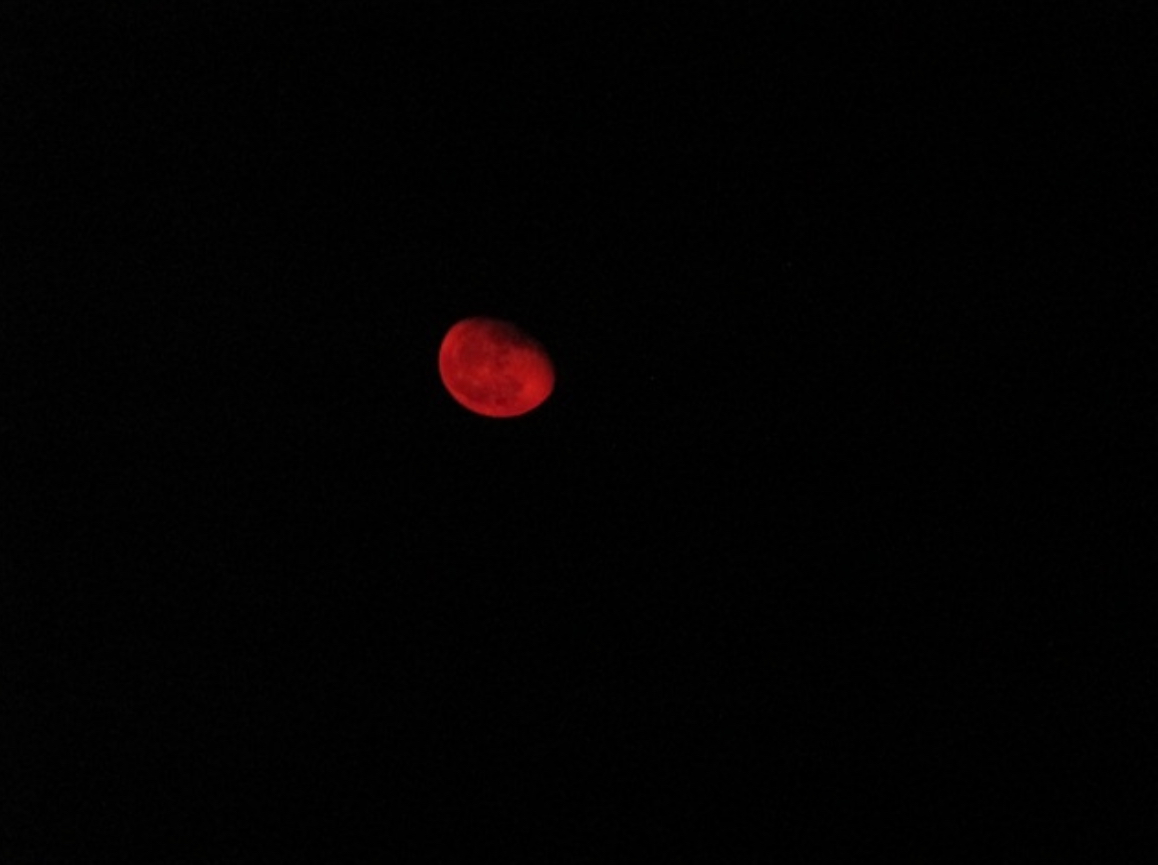
A rare total lunar eclipse, also called a “blood moon,” amazed people around the world earlier this month. During the event, the moon slowly moved into Earth’s shadow and turned a deep red color. Many people stayed up late to watch the sky and take photos of the special moment.
A lunar eclipse happens when the Earth moves directly between the sun and the moon. When this happens, the moon passes through Earth’s shadow. Instead of disappearing completely, the moon turns red because sunlight passes through Earth’s atmosphere and bends toward the moon.
The eclipse lasted for several hours, but the most exciting part was when the moon was fully covered by Earth’s shadow. This moment is called totality, and during that time the moon appeared dark red in the sky.
Photographers and skywatchers around the world captured amazing pictures of the event. Photos were taken from places like the United States, Asia, and Australia. Many of the images showed the moon slowly changing color as the eclipse progressed.
“I stayed up late just to see it, and it was worth it,” junior Isabella Diaz stated.
Scientists say lunar eclipses can be predicted years ahead of time, but that does not make them any less exciting to watch. For many people, seeing the moon change color right in front of their eyes is a rare experience.
Events like this can help people become more interested in space and science. Even students who do not usually pay attention to astronomy may find themselves looking up when something unusual happens in the night sky.
“I had never seen the moon turn red before,” another student , junior Martina Hoyos, said. “It looked really cool and different.”
Many people watched the eclipse with friends or family, making the experience even more memorable.
“It felt special because everyone was outside looking at the same thing,” junior Maximo Biasutto said.
“Seeing the moon turn red in the sky was something I’ll remember for a long time.”