
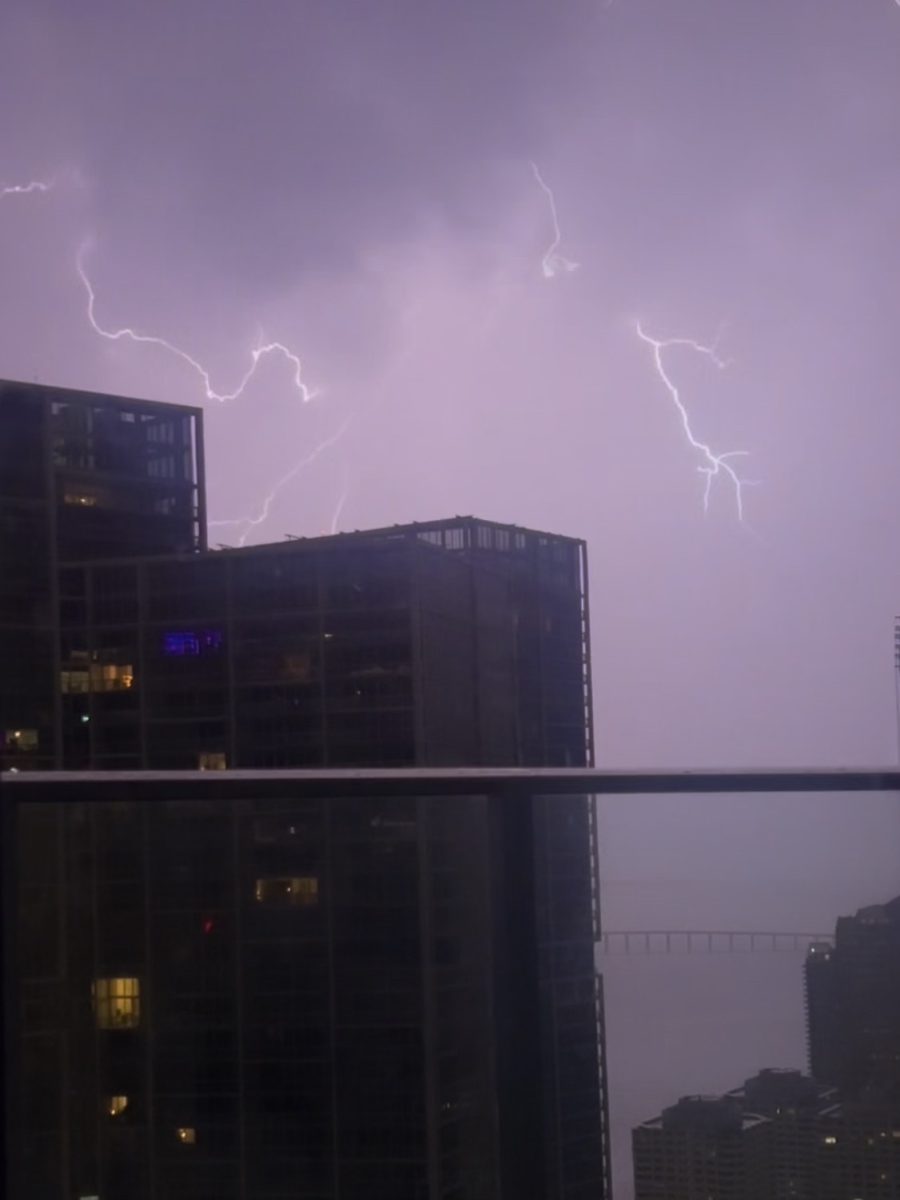
In Miami storms don’t just pour from the sky, they perform. Weather shifts quickly, clear skies suddenly turn grey and within minutes, thunder echoes through the city followed by lightning rapidly flashing. While these storms may seem exaggerated, they are most times part of daily lives in South Florida. This contributed to Florida being known as one of the lightning capitals of the United States with Miami experiencing the most lightning in the region due to its warm oceans and humidity.
Lightning is typically born inside storm clouds when water and ice particles collide, creating what is called an imbalance of electrical charges. The energy is then released as a lighting bolt when the difference becomes strong enough. Lightning bolts are hotter than the surface of the sun at a temperature of about 50,000 degrees Fahrenheit. Though mesmerizing, they pose a threat to individuals who are not careful.
“A storm almost everyday is sort of a routine here in Miami. Even though it causes a lot of traffic, seeing the lighting itself is one of my favorite parts of storms,” shared junior Ashley Gomez.
Aside from a high rate of lighting strikes, Florida is also known to be a state with some of the highest number of lightning-related injuries and deaths. A single bolt can travel through land, water, and surrounding objects carrying millions of volts of electricity. Even those who aren’t directly struck are affected. Experts emphasize the importance of immediately seeking shelter when thunder is heard. Open areas such as beaches or open waters should be avoided during storms due to high risk for strikes. The most effective way to stay safe is seek shelter and avoid going outside by waiting 30 minutes after the last sound of thunder.
“Sometimes you’ll be at a sunny beach one minute, and the next your running for cover as rain and thunder circulate above,” shared junior Alessa Larossa.
What plays a key factor in storms is Miami’s location, surrounded by humid air and warm oceans creating the ideal conditions for thunderstorms. Storms are triggered daily during summer afternoons due to Atlantic sea breezes moving inland combining with warmer air. This pattern causes lightning to be expected and not unusual. Many locals know this and are familiar with sunny mornings followed by sudden afternoon storms. Though these storms may be brief, they are able to produce thousands of lightning strikes in short times.
Understanding how and why lighting happens can help everyone stay safe during storms. For Florida residents, these are more than just storms; they are a regular event that impacts daily lives. Since these storms are so frequent, it’s easy to overlook their risks.
It is important to be cautious because you don’t want to be a bolt’s next target.