
Who Was Anthony Bourdain?
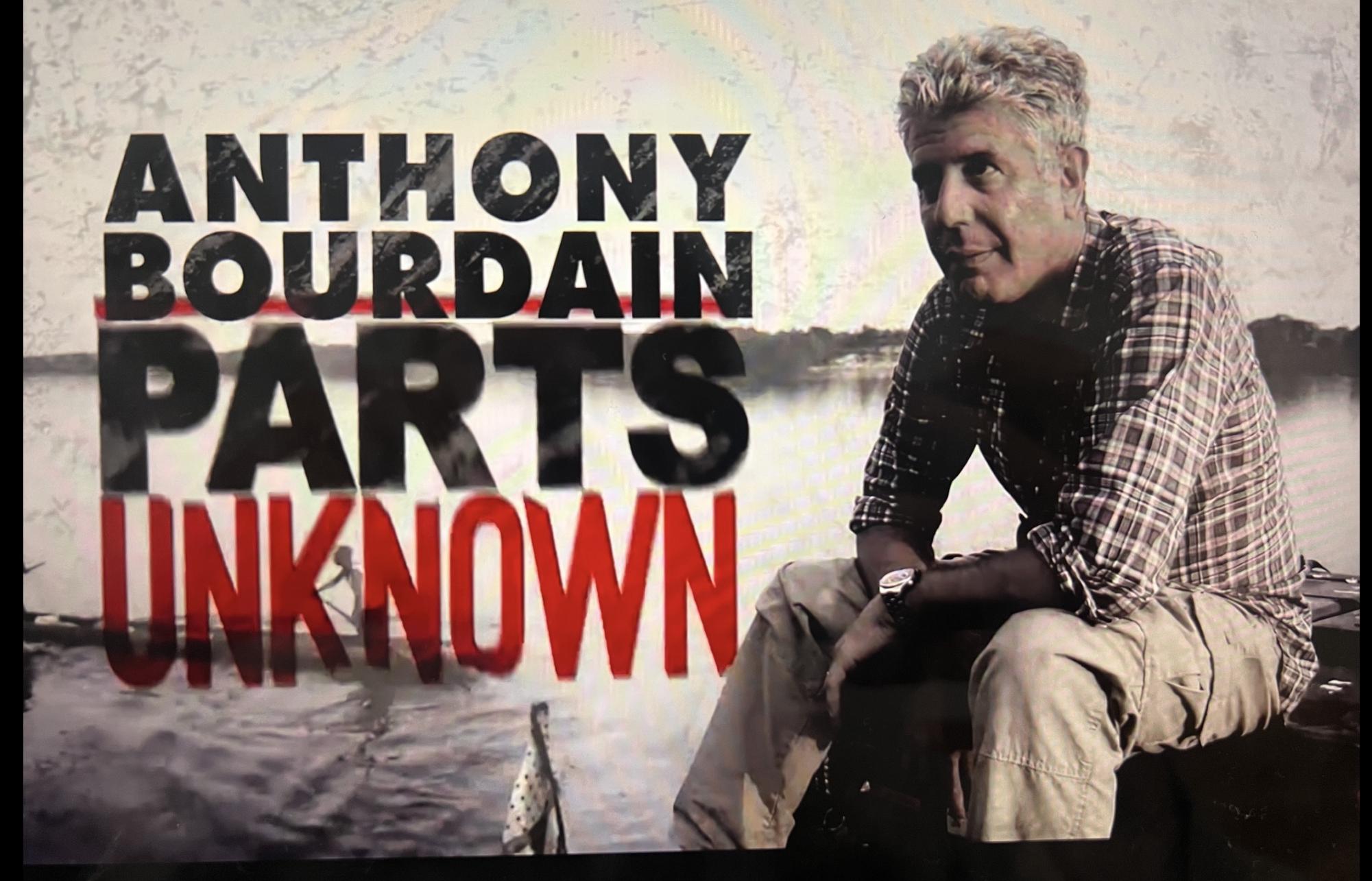
A man who championed for an empathetic and authentic experience of the world, Anthony Bourdain was an American chef and writer best known for his TV work, Parts Unknown and No Reservations, where he explored countries and their cuisine all over the world. In contrast to others, instead of selling luxury, he sold perspectives. Whether he was sitting with the president or a local, he always had the same approach of curiosity instead of judgment. Born on June 25th, 1956, in New York, Bourdain went on to graduate from the Culinary Institute of America and work in kitchens throughout New York before opening his own restaurant Le Bernardin. Throughout his travels, he explored culture not only through food but people, humanizing and defeating stereotypes in countries such as Iran, Lebanon, and the Congo.
Food Is The Connection
Bourdain believed food was the universal language. He understood that the quickest route past ideology was through food. In his eyes, meals dissolved barriers, food revealed history, flavors showed emotion, struggle, identity, but most of all it showed love; the love Bourdain believe everyone should have for one another by appreciating the variety of backgrounds primarily through food.
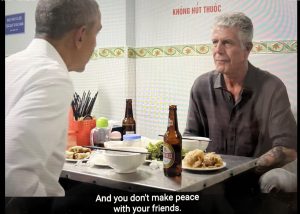
As seen in his TV shows, Bourdain not only ate meals all over the world, but would take time to learn and discuss the culture and politics of the country. During his time in Hanoi, Vietnam, most conversation was focused on reconstructing relations between the U.S and Vietnam after the Vietnam war along with background on cultural dishes. Later in the episode, Bourdain met with President Barack Obama and shared a $6 meal on plastic chairs, demonstrating that even the most powerful man in the world can experience a meal with a humble cook, engaging in the same joy. Through his shows, he taught audiences that when someone invites you to share their food, they’re really inviting you into their world.
While visiting Iran, he challenged western media teachings, having him and his team sit in the homes of Iranians, laughing and enjoying traditional meals. The episode showed the true warmth and hospitality of Iranian people despite the rigid political landscape of the country. Bourdain filmed in Beirut, Lebanon right as the Israel-Lebanon war broke out, sharing meals with families sheltering from war in their homes, acknowledging the tragic realities of war. A memorable episode was in Quebec, where Bourdain joined a local Inuit family’s seal-hunting trip, and was given the seal’s eyeball to eat, as to honor him as a guest. He ate it without hesitation, following his strict rule, to never refuse local hospitality and respect your host’s cultural traditions no matter how foreign.
Food Is Political
Anthony Bourdain often criticized how America enjoys the foods of immigrant culture and labor while constantly demonizing immigrants. He stated how Americans love Mexican cuisine, they love the music and especially the country’s beaches but why don’t they love Mexico? Bourdain continues by revealing the hypocrisy behind this, as immigrants cook a large percent of American meals, clean American houses, wash American dishes, yet Americans stay with ridiculously hypocritical attitudes toward immigration.
“As any chef will tell you, our entire service economy, the restaurant business as we know it, in most American cities, would collapse overnight without Mexican workers.” – Anthony Bourdain
A lot of times, what people eat reflects difficult times of the past, mirrored in his Palestine episode. He showcased people living ordinary lives just like the rest of the world, cooking, laughing, and raising children. Bourdain humanized a place that most people have only seen as a conflictive war zone. After his visit, he was very critical of the world’s silence regarding the dehumanizing condition people are living in, Today, many believe he would be heart broken to see where he once stood and laughed with Palestinians, destroyed to nothing.
“The world has visited many terrible things on the Palestinian people, none more shameful then robbing them of their basic humanity.” – Anthony Bourdain
The treatment of Italian immigrants and criminalization of culture in America between 1880 and 1924 further contradicts views on immigration and politicized food. Americans typically viewed Italian food with intense disgust, leading to derogatory terms, immediately politicizing their dietary habits. Now Italian food is a staple in American life, just like Mexican food.
Bourdain’s Travels Broadened Empathy
Bourdain refused to sugarcoat the realities of a country, whether it was Syria or Japan. He saw beauty in places often flattened into conflict; he saw humanity. Further emphasizing that travel isn’t always comfortable, and sometimes true empathy means sitting with confusion and discomfort, he demonstrated that people universally yearn for connection, have pride for their heritage, and love their families. Bourdain taught that to destroy stereotypes, you have to build connections yourself.
In a City Built By Immigrants
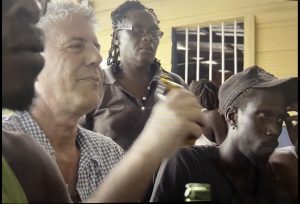
Bourdain’s view feels specially relevant in Miami, a city living on the backbone of immigrant culture, a place filled with immigrant owned restaurants in Little Havana and Little Haiti, featuring food from places like Cuba, Venezuela, Argentina, Peru, Haiti, Jamaica, Ecuador, Brazil, and Colombia. His episode of Parts Unknown, Season 5, Episode 7, based in Miami, focused on what he referred to as the real Miami. It was anything but a “best restaurants in Miami” episode. He zeroed in on immigrant communities, history, food, and the city’s cultural identity. For him, in Miami food wasn’t just food. The mix of cuisines became evidence of migration, labor, resilience, identity, and crisis. In a Miami framed as a brand, packaged for tourists, Bourdain looked for and saw what was real.
Live Like Anthony Bourdain
He would not want an aspiring cook to become a celebrity chef, but to experience life. Anthony Bourdain built a career entering spaces others wouldn’t; he is a model for what the world needs, empathy and love. Be less arrogant, meet people unlike you, seek discomfort, stay curious, stay humble, resist stereotypes, and live. Have the courage to take risks, experience the world openly, and love both what you do, and who you are with, no matter the cost.