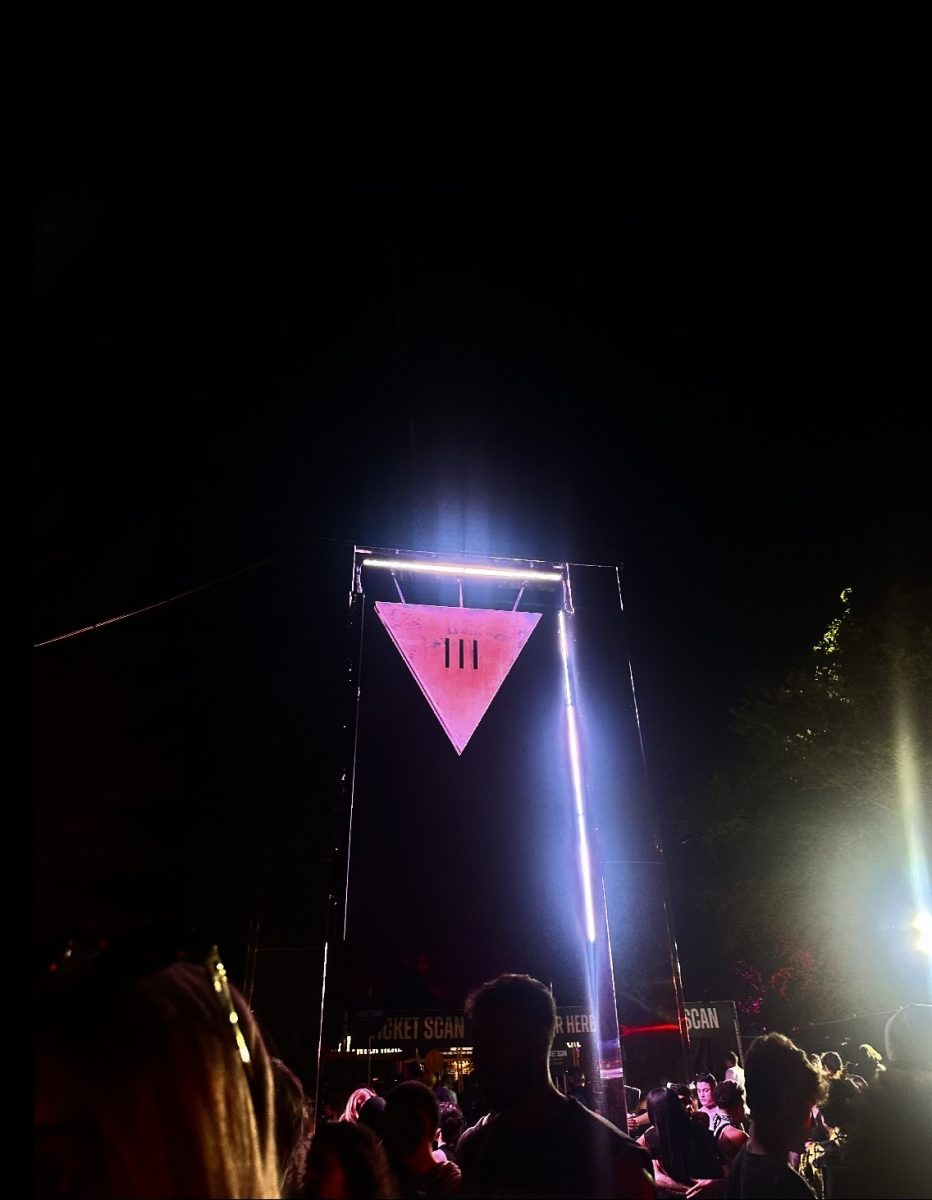
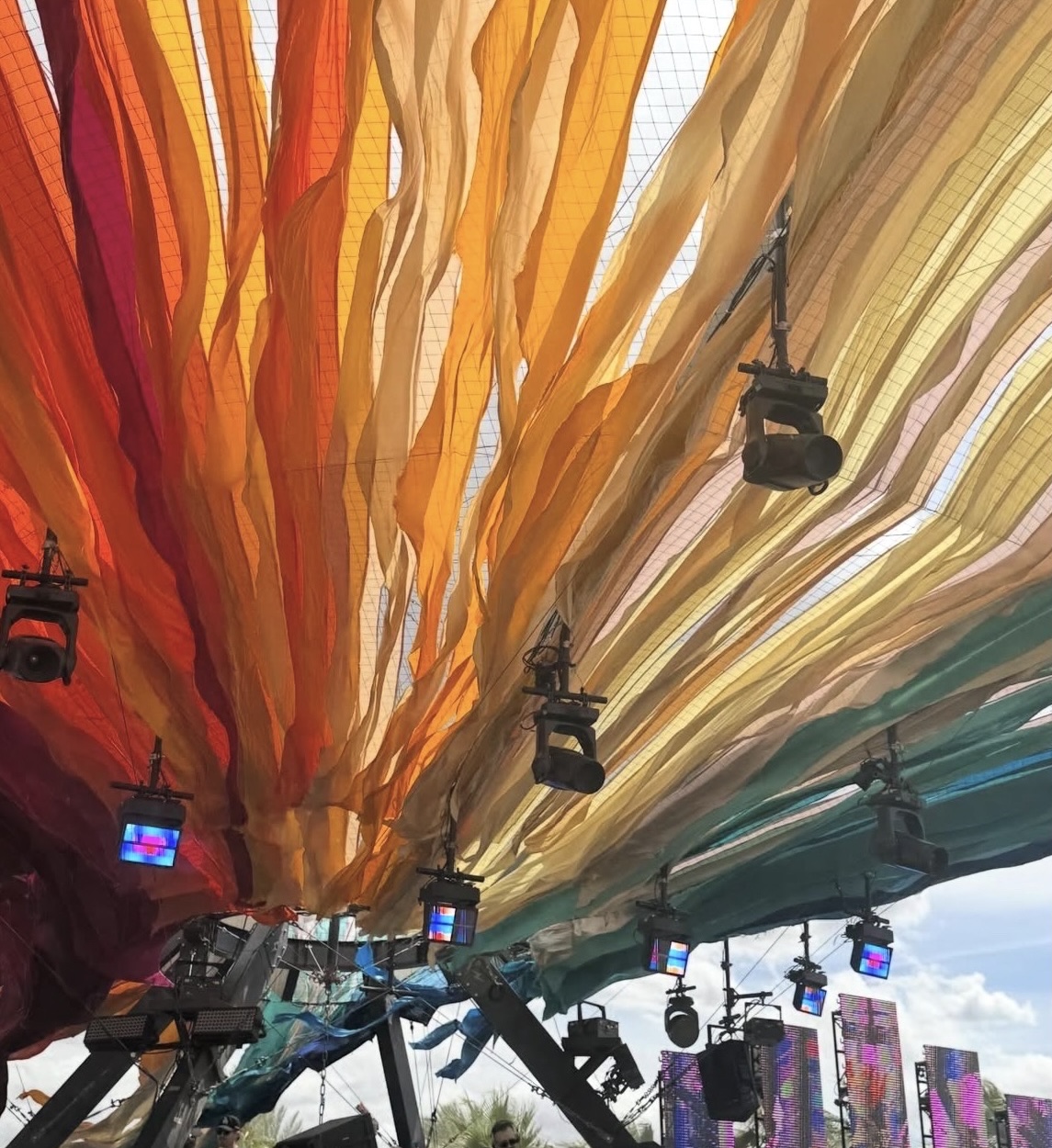
On weekend two of Coachella, indie/garage band The Strokes made a bold political statement during their performance on the main stage. While performing the song “Oblivious,” they displayed a series of images and captions alluding to the CIA and U.S. involvement in the deaths of foreign leaders and global conflict. The inclusion of universities in Gaza and Iran sparked debate over whether this was a powerful statement highlighting patterns or a “bad look” for the festival.
“I’ve noticed the performance circling online, and honestly, I think it was a brave statement. Going up on stage at one of the biggest festivals and criticizing U.S. complicity in deadly situations is something you don’t see often. It made me realize many of the people shown, I had never seen before or heard of,” shared junior Ashley Gomez.
A specific image that caught peoples’ attention was that of slain civil rights leader, Dr. Martin Luther King, Jr., with the caption, “U.S. government found guilty of his murder in civil trial,” referring to the 1999 civil trial Loyd Jowers vs. Coretta Scott King. The jury had determined that there was a conspiracy involving government agencies responsible for his death. This was later shut down by the Department of Justice (DOJ) over lack of evidence. King’s assassination was officially done at the hands of James Earl Ray. Decades of intense government surveillance of MLK by agencies such as the CIA fueled theories and public distrust. His image is a powerful statement, even if controversial, sparking discussions regarding state power.
“It was shocking when I noticed Martin Luther King being shown with said caption, I was never aware there was a trial that may have slightly indicated government involvement. Even if proved wrong, it should be something known,” shared junior Veronica Cedano.
The main visuals were in reference to documented CIA Cold War interventions and foreign government interventions. One image shows Patrice Lumumba, previous First Prime Minister of Congo, who fought for the end of colonial exploitation of Congo before being executed in 1961. He was marked as a threat by western powers though Belgium admitted moral responsibility for his death. Another shows democratically elected leader of Guatemala Jacobo Arbenz, who was overthrown in 1954 to protect U.S. economic interest in a CIA-backed coup, an example of U.S regime change. Salvador Allende who was the socialist president of Chile, died during a 1973 coup backed by the United States, though his death was marked as suicide, and that controversy continues. Allende refused to resign; in his last moments he expressed his hope for Chile’s future saying, “Long live Chile! Long live the people! Long live the workers!” A 17-year long dictatorship followed. Mohammad Mosadegh, the democratically elected leader of Iran, was overthrown in 1953 during a UK and CIA coup labeled “Operation Ajax” motivated by oil interests. This specifically plays a role in the foundation of modern conflicts with Iran, which 73 years later, are still motivated by oil interests. Former Bolivian leader Juan Jose Torres was overthrown and later assassinated allegedly by U.S. influence, leading to Cold War instability. Military leader of Panama Omar Torrijos and President of Ecuador Jaime Roldós Aguilera, both died in separate plane crashes in 1981 that were ruled accidents, though many have suggested hidden involvement.
The performance took a sharp shift to modern conflicts, displaying images of destroyed universities in Iran with the captions stating that more than thirty have been turned to rubble by U.S-Israeli strikes. This was followed by footage of Al-Israa, the last university previously standing in the Gaza Strip before Israeli forces destroyed it in 2024. The caption stated a powerful sentence, “the last university standing in Gaza,” before an explosion and a plane flying overhead is shown. Julian Casablancas, The Strokes lead vocalist, stated that he was “tempted to show those Iran Lego videos,” referring to AI clips criticizing President Trump’s administration made by pro-Iranian groups which just last month YouTube took down the channel behind the videos for “violating spam” and “deceptive practices.”
The crowd’s reaction mirrored the exact message The Strokes were trying to convey. Many responded by leaving the crowd and moving on to other performances specifically when the imagery started, choosing to remain oblivious. While others stayed, taking videos to praise the performance as something needed at this point in time.
“The Strokes have always been vocal with their opinions. I believe it’s important to speak up when it feels right to you. That’s another lesson one can learn from this performance,” shared junior Maria Lutsenko.
Showing this imagery during the song “Oblivious”was not accidental as it was meant as a criticism of society’s pattern of ignoring global conflict. The song has prominent themes of detachment and ignorance, with one line being, “what side you standing on.” It’s meant to criticize the global audience, particularly in the west, for often ignoring issues and remaining disconnected from the impact of foreign policy decisions. By showing historical figures and referencing modern conflicts, The Strokes delivered a powerful message, not only to the listening public but also to world leaders. They blurred the line between politics and art in a performance that wasn’t meant to provide answers, but to challenge what everyone knows yet chooses to ignore.