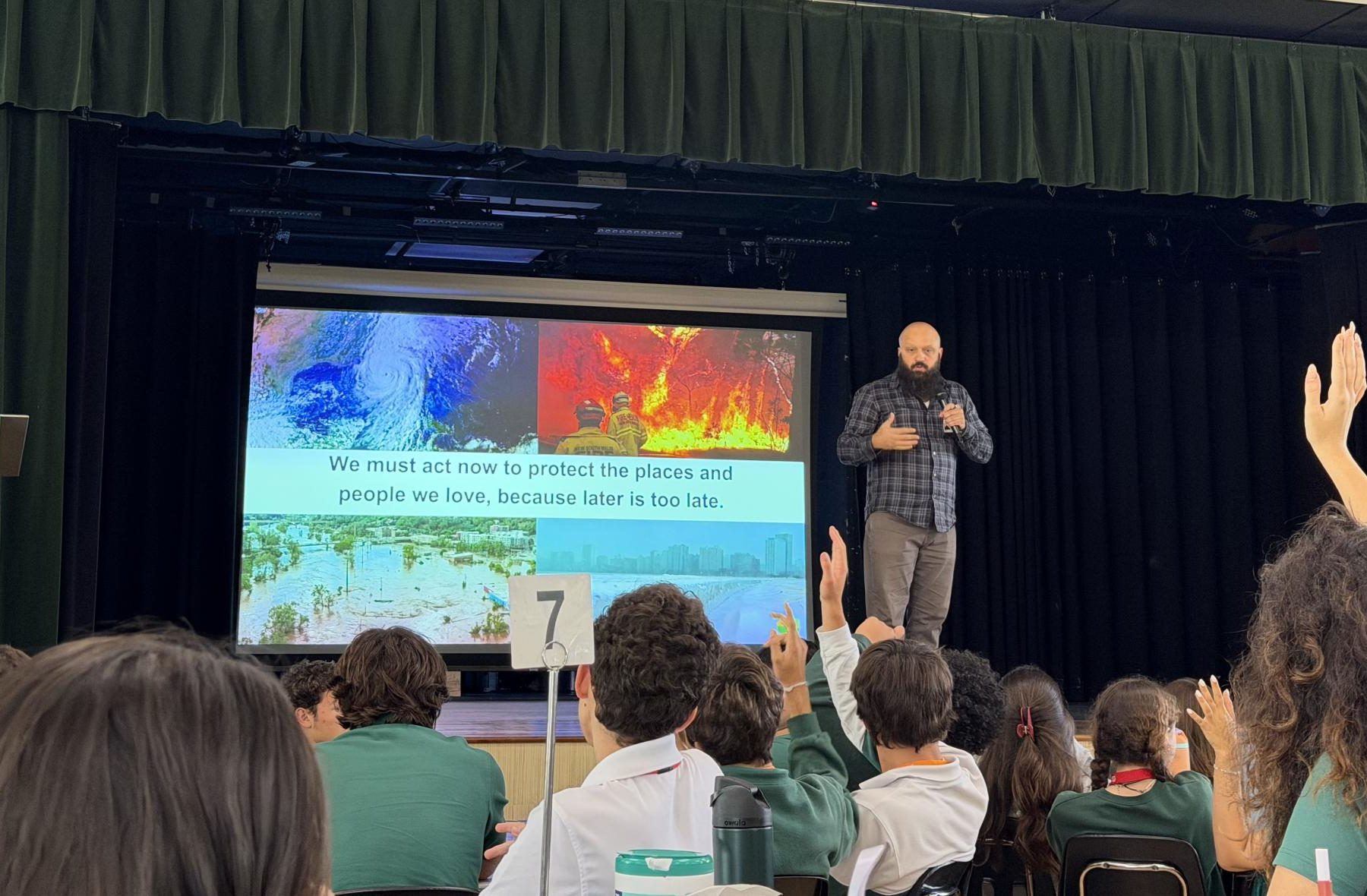
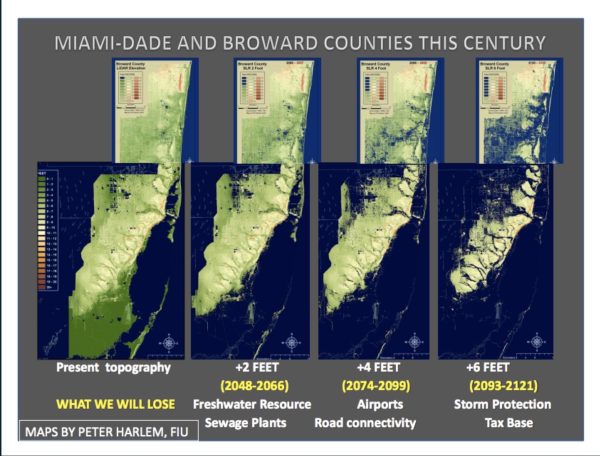
Here’s a thought, whenever the entire campus floods, it doesn’t matter if you are wealthy, poor, Republican, or Democrat: Everyone has to walk through the same flooded street to get to their destination. The analogy applies to any area affected by climate change. As of today, the sea level in Miami-Dade County is projected to rise two-feet by 2050, and six to ten feet by 2100. This implies that the future generations will have to abandon coastal cities unless there emerges a solution to a complex problem.
“I want to make sure I fight for the Earth so that my daughter gets to see the beautiful wonders nature generously offers us,” noted Mr. Owen Gaither of the CLEO Institute.
This is what the nonpartisan and nonprofit organization, the CLEO Institute, advocates on behalf of climate awareness. Founded in 2010 by Ransom Everglades’ former High School Head for 15 years, Ms. Caroline Lewis, the institute stands for Climate Leadership Engagement Opportunities. Peer-reviewed by well known organizations like NASA, UNEP, and WHO (World Health Organization), CLEO provides climate-science education for middle- and high-school students, teacher resources, community training, public awareness, and climate-policy advocacy.
Mr. Owen Gaither, CLEO’s Senior Education and Outreach Manager, delivered a profound presentation at ILS about the causes, impacts, solutions, and actions that not only students but also anyone can take to combat the effects of climate change.
“It doesn’t matter if you are rich, poor, lefty, or righty, we all have to walk through the same flooded street and get our feet wet. We must do something about it,” he said.
Greenhouse gasses are the main reason why global warming occurs. Infrared energy is trapped by the gasses which warm up the globe year after year. The warming of the globe contributes to the loss of land ice and melting of ice sheets which directly increases sea level.
Schools like Pinecrest Elementary in Miami-Dade County participate in composting activities which help reduce the release of methane gasses. Although this wasn’t executed by CLEO, it is the type of initiative the institute hopes schools and individuals adopt after listening to their educational programs.
“Composting seems like a simple thing, and if I can contribute to the cause by doing a simple thing I will do it,” said Coral Gables resident, Mr. George Abrau.
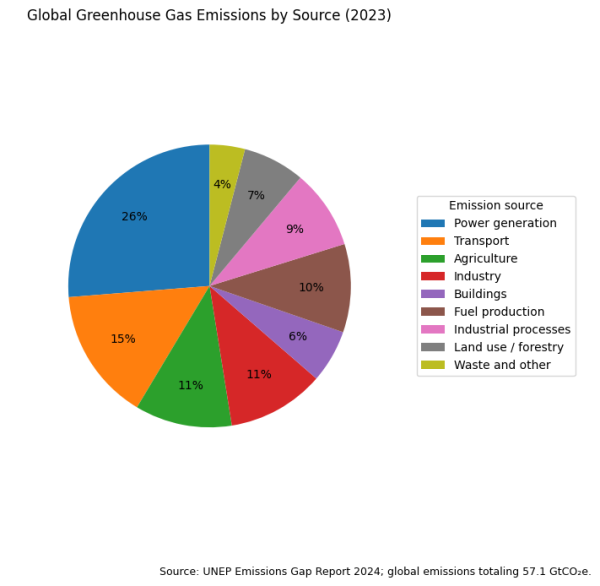
Power generation, transport, and agriculture lead the causes for greenhouse gasses according to a 2024 research study performed by the UNEP. (UNEP)
Although it may seem challenging, CLEO demonstrates that there are affordable and realistic methods one can use to contribute to the reversal of climate change.
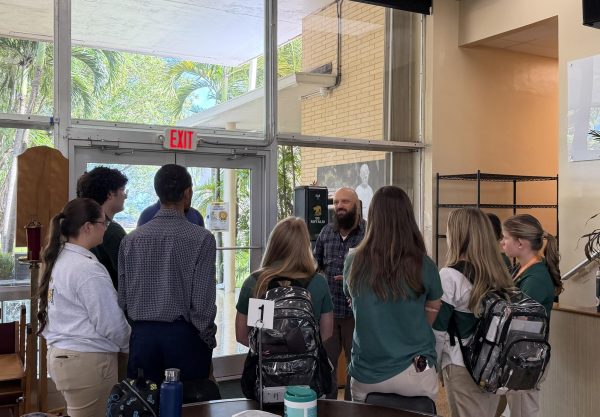
For instance, trees make a big difference in the weather, by dropping the ‘feels like’ temperature around 15 degrees in areas abundant with trees. Recently, the Applied Global Leadership program at ILS, under the leadership of Mr. J.C. Moya, planted a new tree on campus.
Some might ask, “Well, what happens after the presentation ends? You’re left with all this information but, how do you really take action?”
The CLEO Institute created the program genCLEO which allows members to contact government representatives, raise awareness about climate change, and make an impact to reverse climate change.
“This presentation really made me want to be more mindful about the environment because I don’t want future generations to live in a negative world,” said senior Nicolas Cabezon after attending the presentation.
With the help of speakers like Mr. Gaither, CLEO Institute strives to leave a long lasting impact, reflecting the sensitivity of the climate change conversation. CLEO emphasizes the use of the 3.5% rule, which states that with just 3.5% of the community taking action, it’s enough to see positive results that make a difference. The institute provides realistic solutions that are attainable for everyone.