

For decades, the political identities of Republican states were rarely questioned. Yet, onn November 3rd, many of these long-standing patterns were broken. From Texas to Kansas, Democratic candidates secured victories in states that had not elected members of their party in decades.
In the recent midterm elections, Democrats gained control of both chambers of Congress, marking a significant turn of events in Washington halfway through President Donald Trump’s second term. With concerns surrounding immigration, the economy, government accountability, corruption, and the ongoing war with Iran, many Republican voters have switched Democrat for the first time ever.
Texas: A 38-Year Streak Ends
For the first time since 1988, Texas elected a Democrat to the United States Senate.
James Talarico defeated Republican Attorney General Ken Paxton, ending nearly four decades of Republican victories in the state’s senate elections.
A former public school teacher and Texas state representative, Talarico campaigned on government accountability, economic affordability, and reducing political division. Paxton, a prominent Trump ally, emphasized conservative priorities, including immigration enforcement and opposition to government overreach.
Although Texas has long been associated with Republican politics, Talarico’s victory raises questions about whether the state’s political landscape is changing or whether voters were responding to the candidates and circumstances of this particular election.

Kansas: Nearly a Century of Republican Representation
Kansas experienced one of the election’s most historically significant changes.
Democrat Adam Hamilton defeated incumbent Republican Senator Roger Marshall, becoming the first Democrat elected to the state’s U.S. Senate delegation since 1932.
Hamilton, a Methodist pastor, emphasized affordability, political cooperation, and concerns about the direction of the federal government. Marshall, a physician and sitting senator, campaigned on his conservative legislative record and Republican policy priorities.
The result ended a 94-year streak in Kansas Senate elections, illustrating how even deeply established political traditions can change.
South Carolina: A Historic Senate Flip
South Carolina also broke with decades of Republican Senate victories.
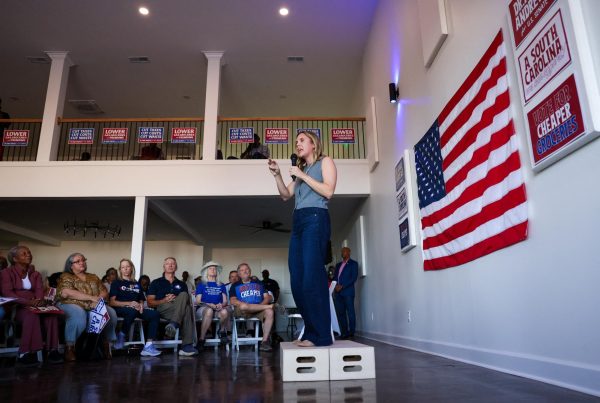
Democrat Annie Andrews, a pediatrician, defeated Republican Senator Darline Graham, becoming the first Democrat elected to the state’s U.S. Senate since 1998.
Andrews focused on healthcare affordability, childcare, and improving access to medical services. Graham, who had received Trump’s endorsement, represented a more conservative approach to taxation, immigration, and federal spending.
South Carolina’s result was particularly notable given its recent Republican voting history. However, one statewide victory does not necessarily establish a permanent shift in party affiliation.
Ohio: Democrats Return to Statewide Office
In Ohio, Democrat Sherrod Brown defeated Republican Senator Jon Husted, returning to the Senate after losing his seat in 2024.
Brown, known for his emphasis on American manufacturing, labor protections, and working-class economic concerns, has spent much of his political career advocating for industrial communities.
Meanwhile, former Ohio health director Amy Acton defeated Republican Vivek Ramaswamy in the governor’s race, becoming the state’s first woman governor.
The two victories were notable in a state that has increasingly supported Republican presidential candidates.
Michigan: A Historic First
While Michigan did not experience a Republican-to-Democratic Senate flip, its election carried historical significance of its own.
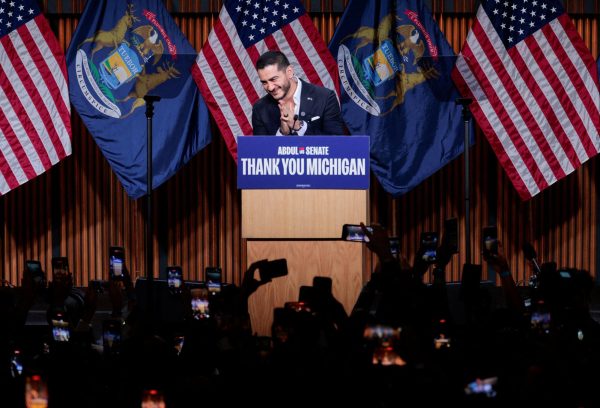
Democrat Abdul El-Sayed defeated Republican Mike Rogers, becoming the first Muslim elected to the United States Senate.
A physician and former Detroit health director, El-Sayed campaigned on expanding healthcare access, addressing economic inequality, and reducing corporate influence in politics. His support for Medicare for All and opposition to U.S. military aid to Israel also attracted national attention and criticism.
Rogers, a former congressman and FBI agent, emphasized national security and economic concerns, while distancing himself from certain administration policies during the campaign.
El-Sayed’s victory preserved a Democratic Senate seat while marking a milestone in American political representation.
What Comes Next?
With Democrats preparing to control both chambers of Congress, the final two years of Trump’s presidency will take place under a different balance of power.
Democratic lawmakers will have greater authority to investigate the administration and challenge its legislative priorities, while Republicans have pledged to continue defending their policies on immigration, taxation and national security.
Still, an election victory does not guarantee that campaign promises will become law. Both parties must now navigate a divided federal government, competing policy priorities, and voter expectations.
Whether the 2026 midterms represent a lasting political realignment or a temporary response to current conditions remains uncertain. For now, the results demonstrate that even America’s longest-standing political traditions are not necessarily permanent.