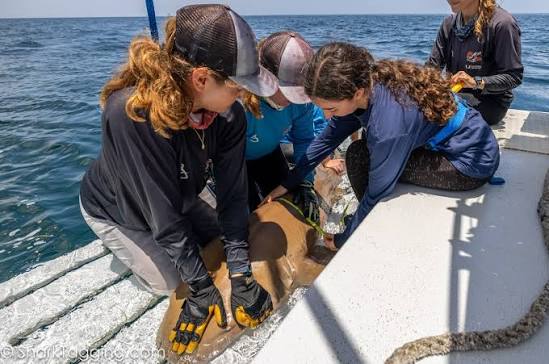
Students from the marine science classes recently had the opportunity to visit Biscayne Bay and participate in a shark tagging activity. The trip allowed students to experience marine science outside the classroom and learn how scientists study sharks in their natural environment.
Shark tagging is a scientific process where researchers place special tags on sharks to collect information about them. These tags help scientists track their movements, understand their behavior, and learn where they travel. Researchers also take blood samples to study different factors about the sharks, including their health and biology. There are different types of tags, and each one is used to collect specific information.
Marine science teacher Ms. Madeline Davis explained why this activity is important for students and their education.
“Shark tagging is a good way to bring marine science students out in the field,” she said.
During the activity, students had the opportunity to observe how researchers work with sharks and learn about the scientific methods used to study them. They also learned how blood samples and different tagging methods help scientists understand more about shark populations. This type of experience gives students a better understanding of how the topics they study in class are used in real scientific research.
One student described the experience by saying, “It was interesting to see how scientists study sharks up close.”
Sharks play an important role in marine ecosystems because they help maintain balance in ocean food chains. By studying sharks, scientists can learn more about their populations and the challenges they face in the wild. Research like this is important for understanding marine life and helping protect ocean environments.
Another student shared their thoughts about the trip, saying, “I learned a lot about sharks and how important they are to the marine ecosystem.”
Overall, the shark tagging trip to Biscayne Bay gave students a hands-on learning experience and helped them understand the importance of marine science and ocean research.