For many high school students, November 1st and November 2nd blend together as just another pair of consecutive dates on the academic calendar. In a Catholic school, however, these back-to-back days mark two distinct and deeply significant traditions: All Saints’ Day and All Souls’ Day. While they sit right next to each other and share a common focus on the afterlife, their theological meanings, moods, and traditions could not be more different.
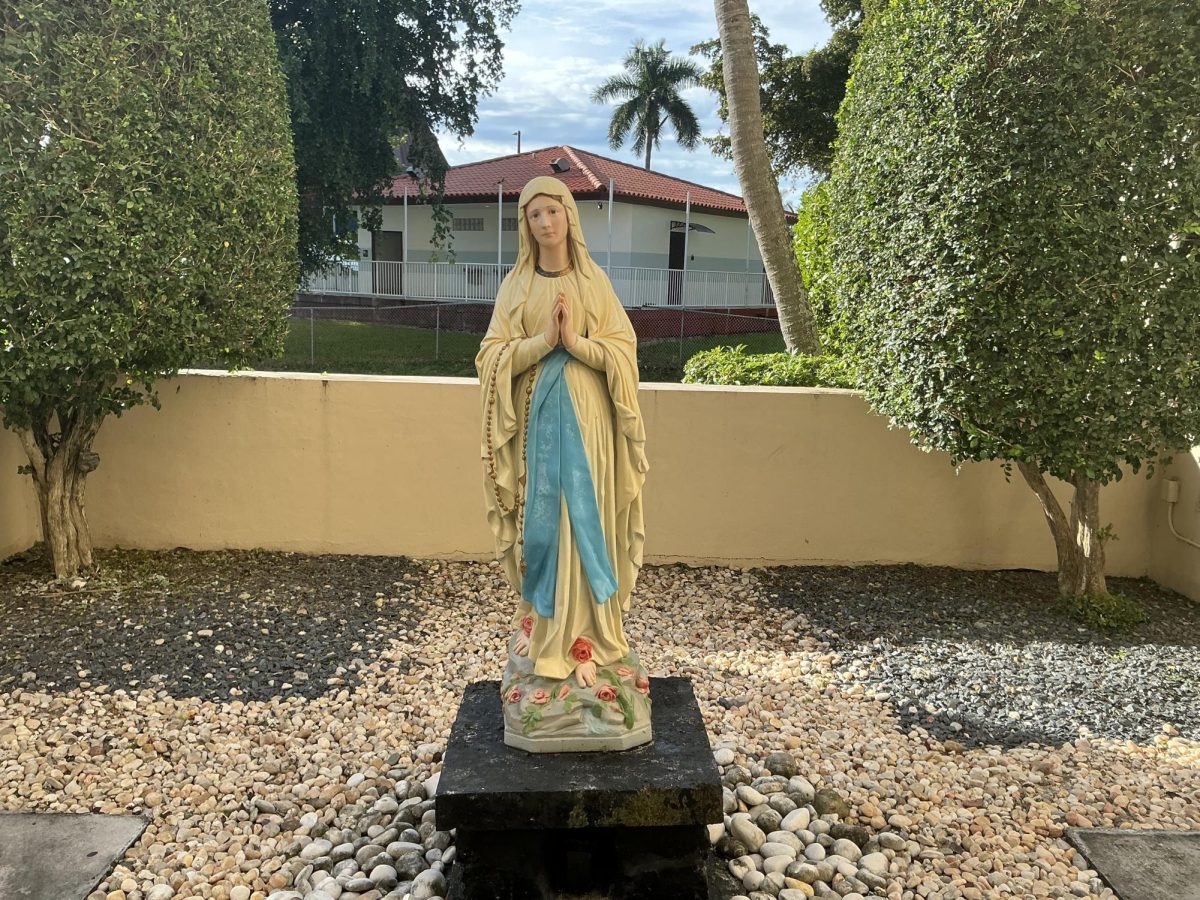
Observed on November 1st, All Saints’ Day is a solemnity dedicated to honoring all Christian saints. This includes both the famous canonized figures like St. Francis of Assisi or St. Thérèse of Lisieux, and the countless lesser-known individuals who led holy lives and are believed to be in heaven. It is a day of great joy, celebration, and triumph for the entire Church.
For students navigating the initial confusion between the two days, the distinction often comes as a lightbulb moment during theology classes.
“At first, I honestly thought All Saints’ and All Souls’ were just two names for the exact same holiday back-to-back,” said sophomore Aden Tabraue. “But once we talked about it in class, I realized All Saints’ is a big celebration of everyone in heaven, while All Souls’ is more about praying for family members and friends who passed away.”
Right on the heels of the celebration comes November 2nd: The Commemoration of All the Faithful Departed, commonly known as All Souls’ Day. While All Saints’ Day looks at those who have crossed the finish line into heavenly glory, All Souls’ Day turns our attention toward the souls undergoing purification in Purgatory before entering heaven. It is a quieter, more reflective day centered on prayer, almsgiving, and offering Masses for the dead. Across Catholic campuses, this often takes tangible form through memorial altars and prayer lists.
“All Souls’ Day feels a lot more personal to me,” said sophomore Daria Pereira. “We brought in photos of our late relatives for the school memorial altar, and lighting a candle for them made the theology we learn about Purgatory feel real and close to home.”
To truly understand why the Church places these two days back-to-back, faculty members point to the core Catholic doctrine of the Communion of Saints, the spiritual solidarity uniting believers on earth, in purgatory, and in heaven.
Sister Sadeh Alnour, FMA, explains that the pairing is a complete picture of the spiritual family.
“Think of it like our extended spiritual family tree,” Sister Sadeh Alnour explained. “On All Saints’ Day, we are celebrating and cheering on the family members who have already made it home to heaven. On All Souls’ Day, we are wrapping them in our prayers and helping those who are still on their way. One is a joyful feast, and the other is a profound act of love.”
Ultimately, while All Saints’ Day inspires students to strive for holiness by looking at those who made it, All Souls’ Day reminds everyone of the duty to love and pray for those still on their journey. Together, they anchor the school community in hope, reminding students that death is not the end of a relationship, but a transformation of it.