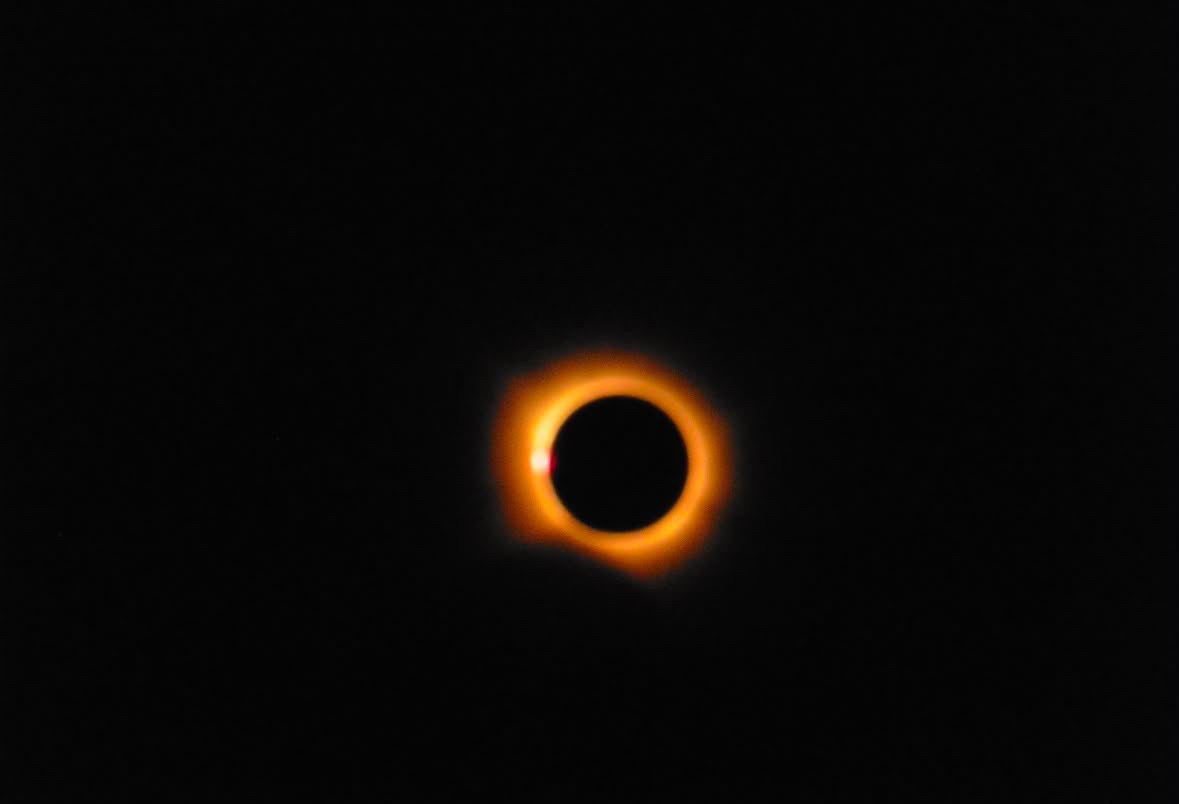
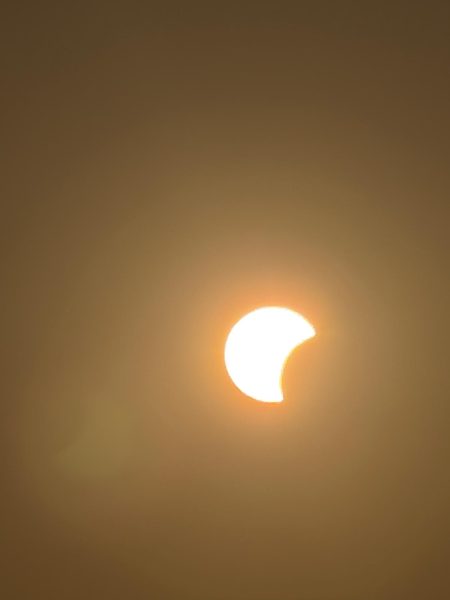
Millions of people across Europe gathered August 12th to witness Western Europe’s first total solar eclipse in 27 years. This momentous event occurred when the moon passed directly between Earth and the Sun causing the Sun to be completely blocked for people located in certain points of the world. The path of totality spread darkness over countries like Greenland, Iceland, Russia, and most dramatically Spain, where it happened shortly before sunset. Many countries in most of Europe and northwestern Africa that weren’t in the path had the opportunity to watch a partial eclipse.
As we know, the Moon orbits the Earth. During this phenomenon, the Moon moves between the Earth and Sun causing the Moon to cast its shadow onto Earth. The darkest part of this shadow is called the umbra and if you’re standing in its path, you experience totality with the sun being completely covered. The outer shadow where you can see a partial eclipse is called the penumbra. Though the sun is 400 times wider than the moon, it also happens to be 4oo times farther away from Earth causing the Moon to appear almost exactly the same size as the sun and completely cover it.
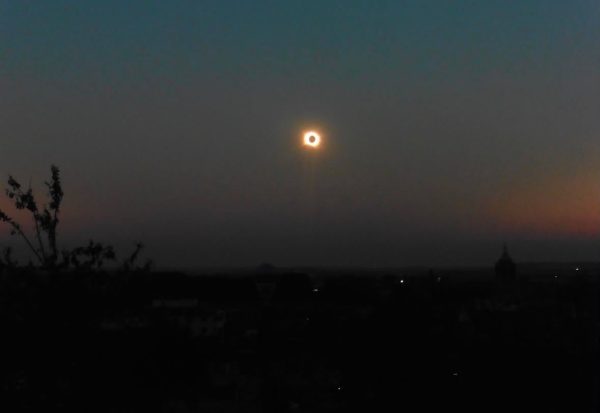
During totality, crowds clapped and cheered as the sky plunged into total darkness. It was reported that up to 6 million people traveled to rural areas in Spain where set up viewing locations were able to fit large crowds. In Iceland around 80,000 people viewed the eclipse, with eclipse glasses selling out in many parts of the country. Spectators in Spain were able to see a rare phenomenon called Baily’s beads, where before and after totality sunlight shines through valleys and uneven points of the moon causing bright beads to appear around the moon.
“If I could have traveled to witness the eclipse, it would have been great. I love eclipses and I think it should be an event everyone gets to experience at least once in their lives,” shared senior Zoe Pazos.
Looking directly at the sun during an eclipse can cause serious harm to the eyes, so it’s very important to use proper solar viewing equipment. Regular glasses will not provide the necessary protection needed to protect the eyes, when the sun is completely covered is the only point you can view without glasses.
“I was in Spain this summer, but unfortunately had to leave before the eclipse. Besides that, I’ve heard many stories about the dangers of viewing eclipses without glasses. Some stories even say people went blind,” shared senior Maria Alonso.
If you’re worried you missed a once in a lifetime opportunity, ease your concerns. Spain is entering an unusual period for eclipses where there are two more coming up. Referred to as the Iberian Eclipse Trio, following this eclipse there will be another total solar eclipse August 2nd, 2027 which will be significantly longer, lasting six minutes instead of two. Then, the annular solar eclipse of 2028 will be experienced in Spain and Portugal, leaving many opportunities to witness this momentous experience.