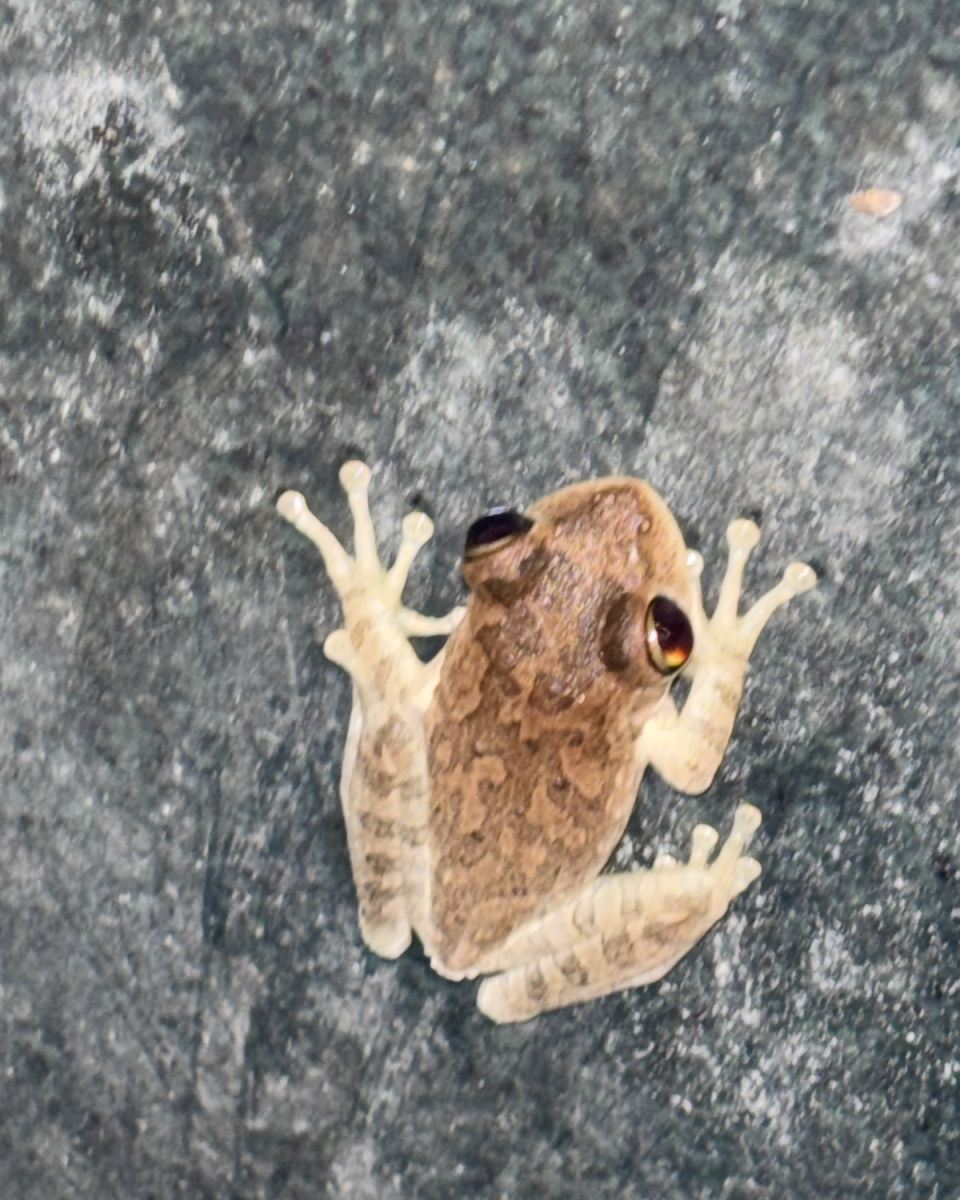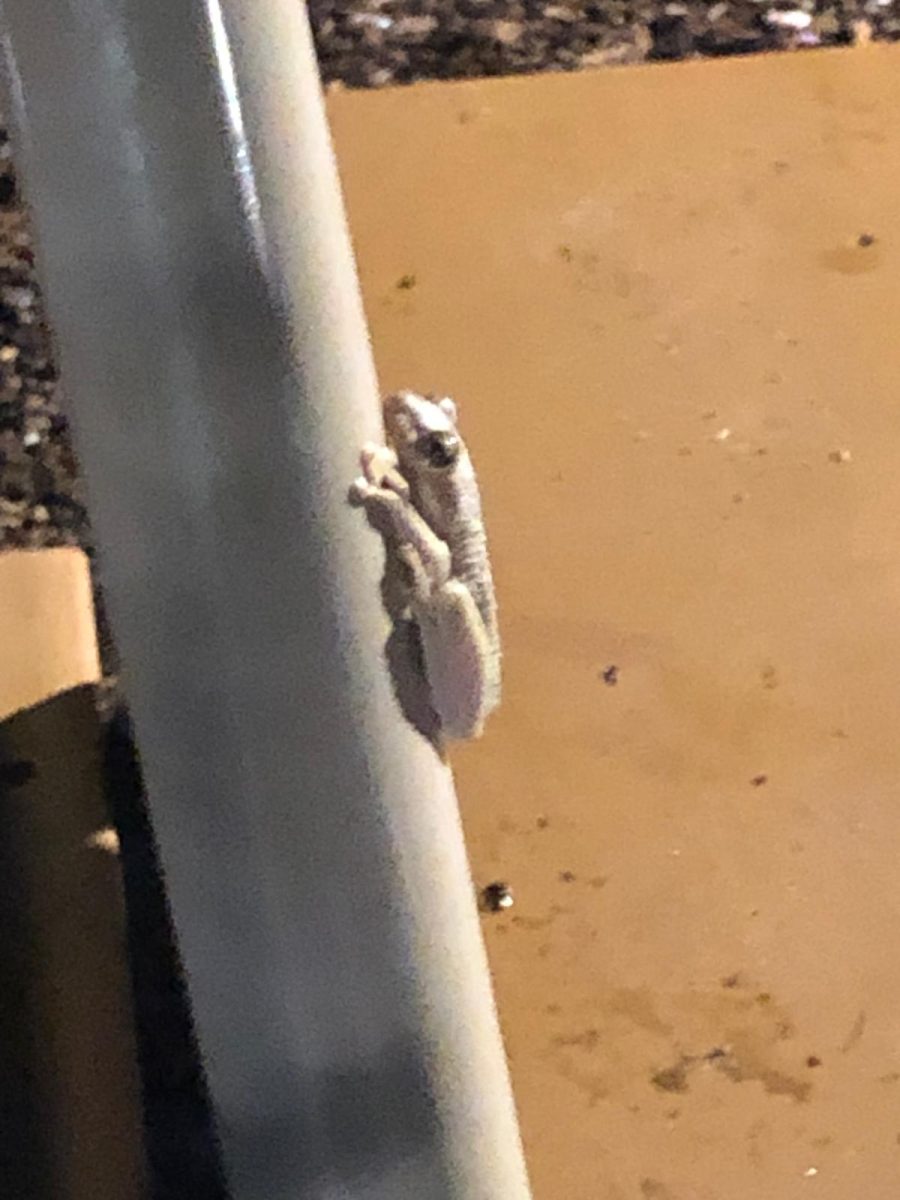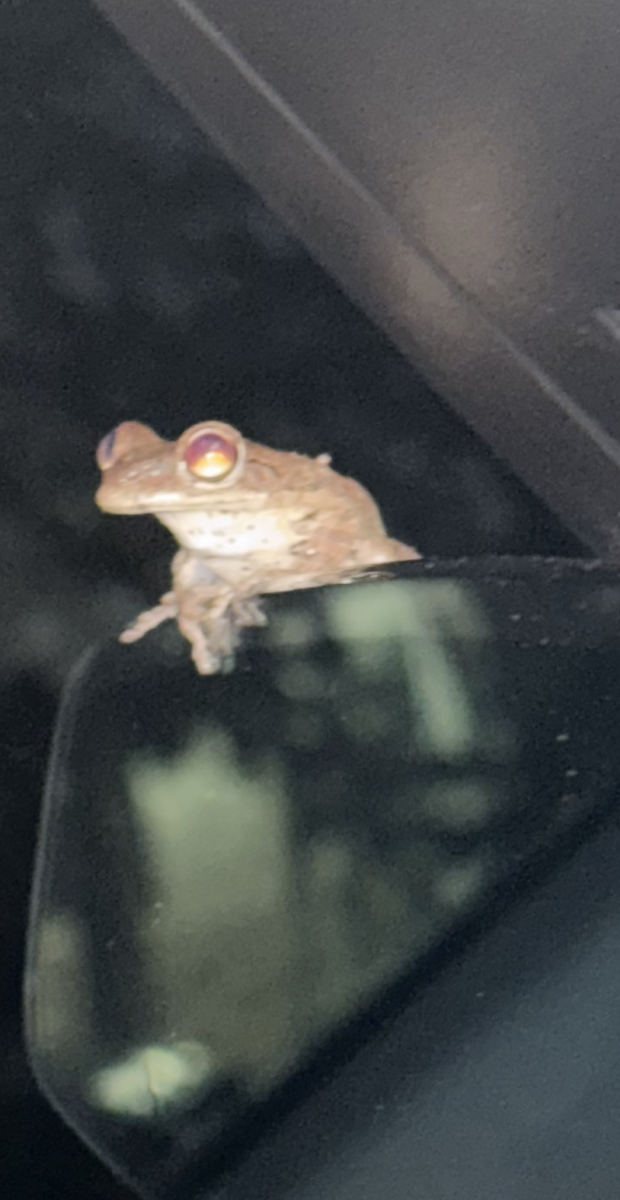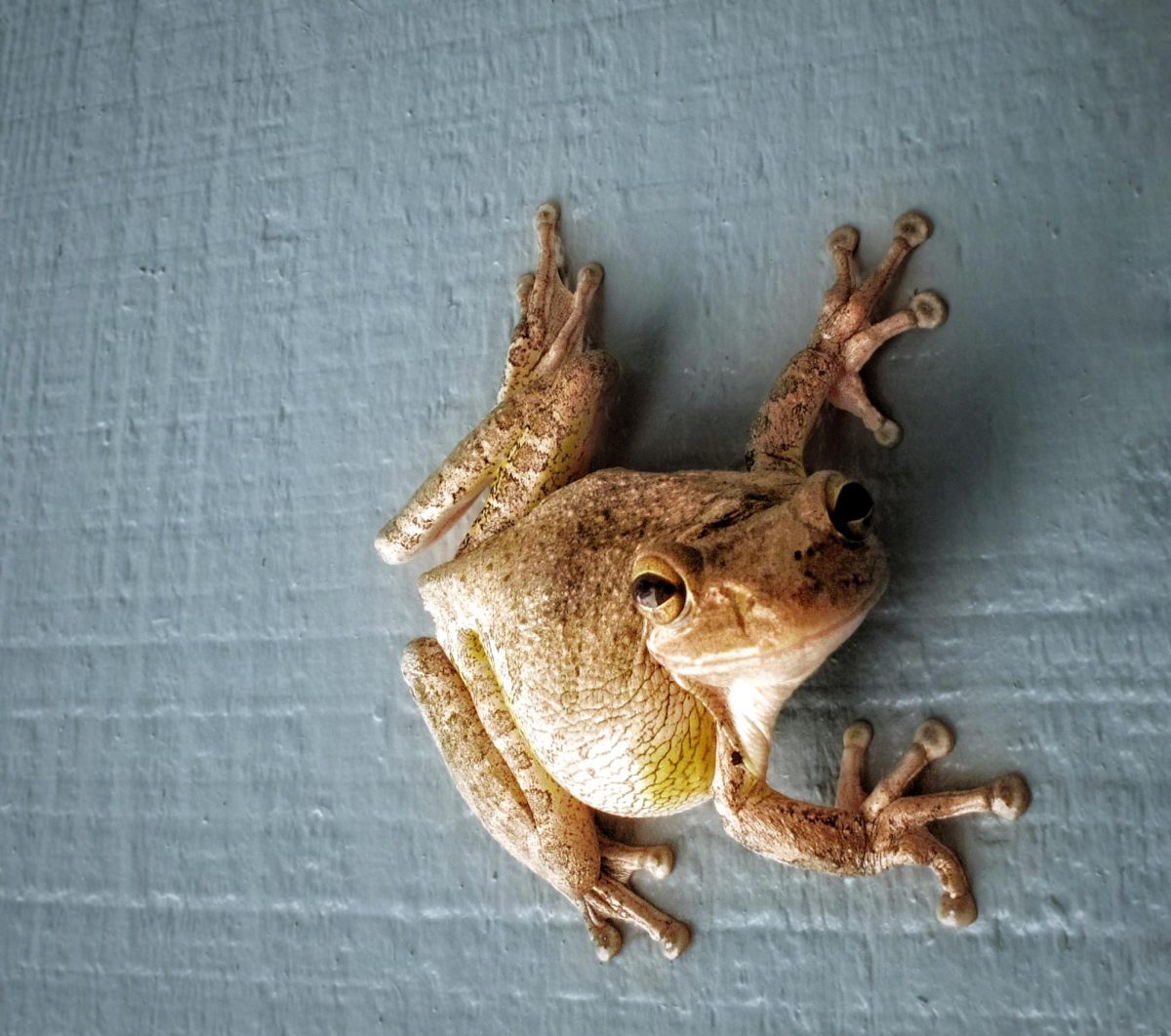
A deep, urgent croak reverberates inside a house pipe. Within, a brown figure appears, coffee-blackened eyes wide and alert, pads clinging with desperation. The small creature pauses, preparing to spread its dominance across Florida just as its ancestors did. What you are seeing is not just wildlife: it’s the dangerous surge of invasive Cuban Tree Frogs rapidly overrunning the state.
“Cuban Tree Frogs are a significant ecological threat because their wide diet and adaptability allow them to outcompete and even consume native frogs, lizards, and insects in invaded habitats,” said University of Florida Ecology Specialist Elen Rivera.
Where are Cuban Tree Frogs from? The Cuban Tree Frog (Osteopilus septentrionalis) originates from the islands of Cuba, the Bahamas, and the Caymans. During the 1920s, Cuban Tree Frogs arrived in Florida via horticultural shipments, and t
heir numbers have increased dramatically in recent years. Since their first documented sighting in the Florida Keys in 1932, the population of Cuban Tree Frogs has skyrocketed—according to the University of Florida, they are now found in more than 35 counties across the state, with some local surveys reporting up to 80% of tree frogs captured being Cuban Tree Frogs. This growth is harming Florida’s ecology by reducing the population of other native species.
“These frogs are going through the state disrupting our native population,” said University of Florida assistant professor Heather Walden.
Why do Cuban Tree Frogs Pose a Threat?: Cuban Tree Frogs have started to outcompete local species such as the Green Tree Fro
gs, which, as a result, has led to a decline in their population. The abundance of Cuban Tree Frogs has also led to greater competition for resources like prey and refuge. These invasive frogs are eaten by native Florida snakes; however, they have attained adaptations to avoid being consumed, such as toxic skin secretion, which keeps them from drying out, making them less than nutritious to their predators. In addition, their skin secretion may cause pets to become sick and may cause issues with household systems such as plumbing, power outages, (entering power boxes), pool filter clogging, and stains. These frogs have also been seen to carry parasites harmful to humans.
“We know that they will consume just about anything that fits in their mouths,” said University of Florida PhD candidate in Ecology, Alex Baechor.
What is the diet of a Cuban Tree Frog, and how do they reproduce? Cuban Tree frogs are carnivorous and will ingest anything that is smaller than their head. Their primary diet consists of beetles, roaches, ants, and caterpillars. However, Cuban Tree Frogs will also eat smaller frogs, lizards, spiders, crickets, mealworms, snails, millipedes, and small snakes. To reproduce, Cuban Tree Frogs will lay their eggs externally as tadpoles in ponds, and these tadpoles can survive in various ponds. The tadpoles will metamorphose into a frog within weeks to months, depending on the temperature.
“They are what is calle d a weedy species,” added University of Florida PHD candidate in Ecology Alex Baecher.
How are Cuban Tree Frogs physically different from native frogs? The Cuban Tree Frog is significantly bigger than regular native frogs, typically 3 to 6 inches, unlike native frogs, which rarely exceed 2.5 inches. Unlike native Florida frogs, which have smooth skin, Cuban Tree Frogs have warty, rough skin. Cuban Tree frogs contai
n golden-colored eyes and beige-colored skin, while native Florida frogs typically have green skin. In addition, Cuban Tree Frogs have significantly larger toe pads than regular frogs.
“Fun fact, juveniles often have red eyes,” indicated US Ecological Survey Ecologist, Brad M. Gloriso.
Why are Cuban Tree Frogs In South Florida?: Cuban Tree Frogs are difficult to find living large numbers in Northern Florida and northern states due to their unique environmental needs. As the name suggests, Cuban Tree Frogs are naturally accustomed to Hot and Humid weather due to their origins in Cuba, The Bahamas, and The Cayman Islands. North Florida and Northern states are colder, providing a hostile and inadequate environment for long term growth or living. In addition, Cuban Tree Frogs utilize high humidity areas because they are prone to dehydration and seek wet areas such as pipes or man-made water sources for year round breeding t
hus a majority of Cuban Tree Frogs are spotted in South Florida. For additional statistical information involving records of Cuban Tree Frog Records and their movement patterns, see the link below from the US Geological Survey.
https://nas.er.usgs.gov/viewer/omap.aspx?SpeciesID=57#
“I remember seeing Green Tree Frogs un the school yard when I was in elementary school in the 1980’s, but I have not seen one in a long time,” stated environmental teacher, Ms. Cecilia Calleros.
Why Do Cuban Tree Frogs Make so Much Noise?: Cuban Tree Frogs are physically larger than typical native Florida frogs thus they posses larger vocal sacs. Due to the large nature of their vocal sacs, Cuban Tree frogs pull in more air a
nd force it over their vocal cords like a balloon under their chin. The primary purpose of the noise is for reproduction because it indicates a male frog has found a sufficient water source for eggs and the louder/ more frequent noises a male Cuban Tree Frog makes, the more suitable he is perceived by females. In addition, the surplus of Cuban Tree Frogs makes competition extreme and this leads to chorusing ( a loud wall of noise caused by the calling of multiple Cuban Tree Frogs). These calls are harmful to native species because they make loud noises across various frequencies to make it difficult for native fogs to communicate with each other.
“I have caught a couple of Cuban Tree Frogs in Biscayne Bay,” said Miami Dade Biology student, Juliana Echiverra.
What do I do if I find a Cuban Tree Frog? Start off by documenting the sighting by taking a photo. Apps such as iNaturalist and Seek allow users to report sightings of invasive species. Avoid relocating it, as relocating an invasive
species may allow it to continue reproducing more quickly. Avoid the frog interacting with any pets, as it may harm them with the fluid they secrete. If you touch one, immediately wash your hands. In addition, block off any places that could interfere with systems inside your house to avoid any damage. Cuban Tree Frogs may also be humanely killed by using anything that contains 20% benzocaine. Products with 20% benzocaine include first aid, burn sprays, toothache gels, or toothache liquids. Apply the liquid liberally onto the frog and then freeze the frog inside a plastic bag for 24 hours, and then dispose of the bag in the garbage.
The Cuban Tree Frog may be an invasive species, but it has a will to expand unlike others. It represents determination, adaptability, perseverance, and strength. These frogs demonstrate that even a small animal can change the entire ecology of a state.