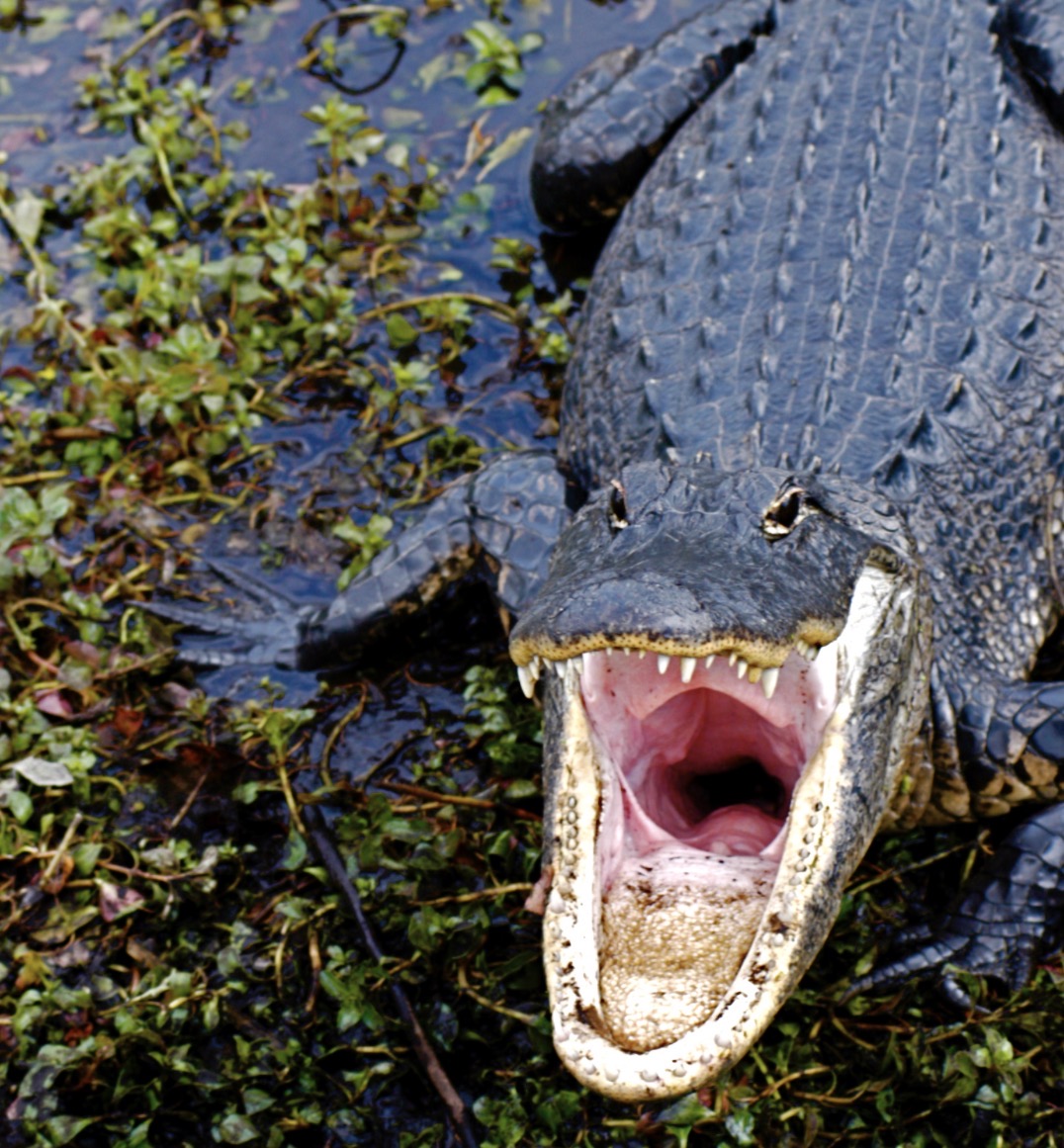
In the wetlands of South Florida, two of the most powerful reptiles on Earth live side by side: the American crocodile (Crocodylus acutus) and the American alligator (Alligator mississippiensis). These animals, part of a group known as crocodilians, have existed for over 200 million years—long before humans, and even before most trees. Yet today, they are often feared, misunderstood, and sometimes unfairly treated as threats rather than vital parts of the ecosystem.
“Saltwater crocodiles are so cool, because they are apex predators,” said Sofia Crespo, a senior at Immaculata-La Salle High School.
“They can hunt both off and on land… it’s really cool how versatile they are,” she added.
This adaptability is one of the reasons crocodilians have survived for so long. Their ability to conserve energy is remarkable—crocodilians use up to 90% less energy than mammals of similar size, allowing them to survive weeks or even months without eating. Their bite force is also among the strongest in the animal kingdom, reaching over 3,000 pounds per square inch (psi).

“Crocs as a species are older than sharks… they are one of the most perfect predators,” added Pablo Gamarra, also a senior. He points out that crocodiles can even regulate how many calories they use, an evolutionary advantage that helps them survive in harsh conditions.
Florida is the only place in the world where crocodiles and alligators coexist in the wild. Alligators are far more common, with an estimated 1.3 million living across the state. In contrast, the American crocodile population is much smaller, with around 2,000 crocs in Florida, mainly in coastal areas like the Everglades and Florida Bay. Though they may appear similar, crocodiles have narrower, V-shaped snouts and can tolerate saltwater, while alligators have broader snouts and prefer freshwater environments.
In case your wondering whether this is a far away phenomenon, think again.
“There’s a croc that lives in the vicinity. I have seen him around campus and Vizcaya,” said Mr. Gaston Arellano, Building and Facilities Manager.

Despite their intimidating appearance, attacks on humans are extremely rare. According to the Florida Fish and Wildlife Conservation Commission, there are only about 8–10 unprovoked alligator bites per year in Florida, despite millions of people living near or visiting their habitats. The chance of being seriously injured by an alligator is estimated at roughly 1 in 3.1 million. Most incidents occur when people feed them, get too close, or enter their habitats without caution. Crocodilians are ambush predators, meaning they conserve energy and only attack when necessary.

“They are ambush predators so they only use their energy when really aiming to get something,” explained Ms. Madeline Davis, a biology teacher at ILS who studied marine biology and wildlife.
“They are top predators so they help maintain trophic levels… they are actually very important,” she added.
As apex predators, crocodiles and alligators play a critical role in maintaining balance in their ecosystems. They help control populations of fish, turtles, and birds, preventing overpopulation and supporting biodiversity. Alligators also create “gator holes,” which retain water during dry seasons and support dozens of other species, making them a keystone species in the Everglades. Without them, ecosystems like the Everglades could become unstable.
However, fear often overshadows these facts. “They are very misunderstood,” said ILS marine science teacher Ms. Nicole Maribona.
“People are afraid of them, like sharks… if educated on these species, [people] would not only love them, but understand them and not be afraid,” she explained.

This fear can lead to harmful actions, including habitat destruction and unnecessary killing.
Human activity poses a much greater threat to crocodilians than they do to humans. Over the past century, Florida has lost nearly half of its original wetlands, severely impacting wildlife habitats. Although the American crocodile is protected under the Endangered Species Act and its population has increased from just a few hundred in the 1970s to around 2,000 today, it still faces ongoing environmental challenges.

Education is key to coexistence. Simple precautions—such as not feeding wildlife, keeping at least 30–60 feet away, and staying alert near water—can prevent most negative encounters. If you come into contact with a crocodile or alligator, remain calm and slowly back away. Do not run erratically; move in a straight line and create distance. Never approach or feed them. If one hisses or lunges, it is a warning sign to leave immediately. In the extremely rare case of an attack, fighting back—especially targeting sensitive areas like the eyes—can increase your chances of escape.
“Every animal big and small is important to our ecosystem,” said sophomore Lunna Reid. This idea reflects a broader truth: fear often comes from a lack of knowledge. By learning more about crocodiles and alligators, people can replace fear with respect.
“I like how they are both equally smart and strong,” added junior Lucas Montes De Oca. That balance of intelligence and power is exactly what makes these reptiles so remarkable—and so important to protect.
In Florida, living alongside these ancient predators is not just a reality—it’s a responsibility.
To learn more about alligators and crocodiles, visit:
https://myfwc.com/wildlifehabitats/wildlife/american-crocodile/croc-or-gator/
Special thanks to photography and environmental science teacher/club adviser, Ms. Cecilia Calleros for providing photographs.