In under 60 seconds, a TikTok video can explain a political issue, assign blame, leaveing viewers feeling informed. But what happens when that explanation is incomplete or misleading?
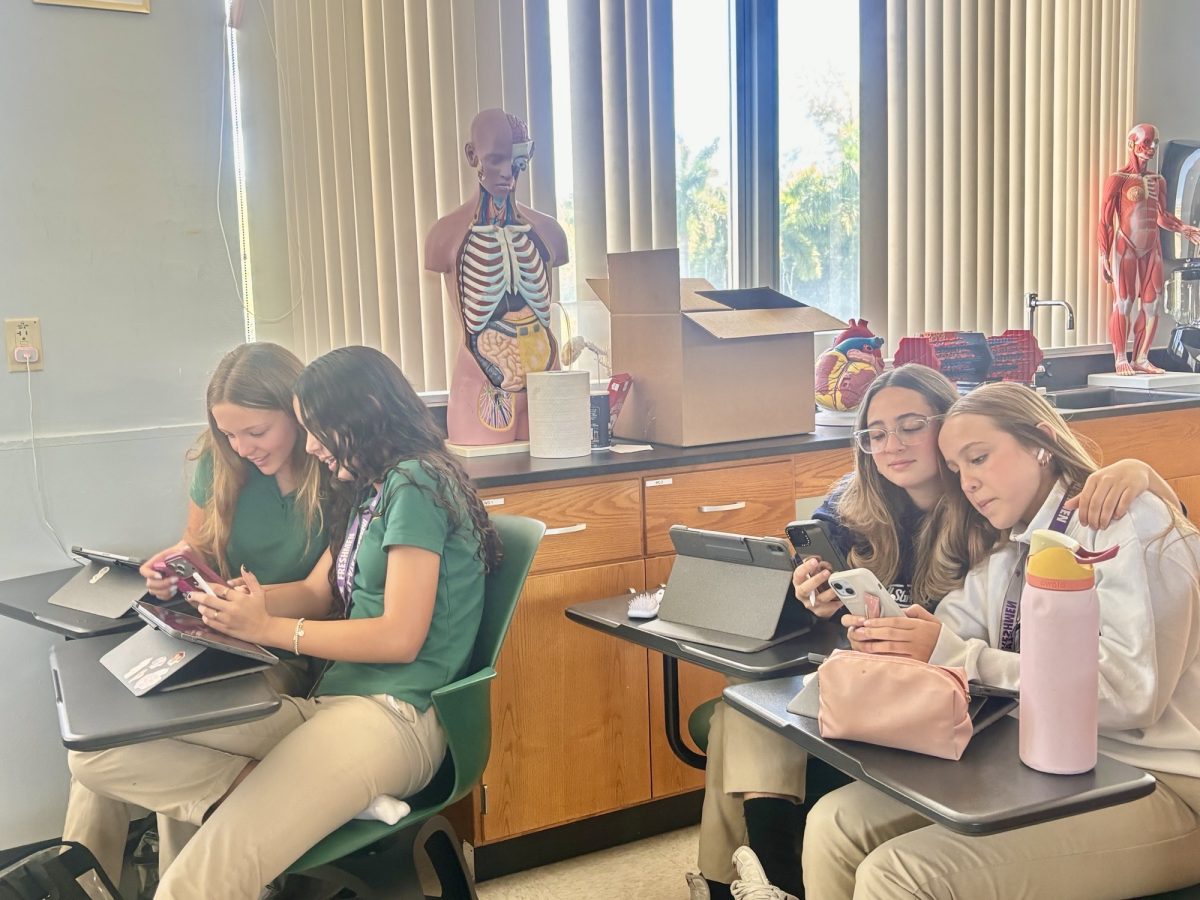
For many teens, social media is now the first place they encounter political information, raising questions about how well they truly understand the issues they see online. At Immaculata-La Salle, more students turn to social media platforms like Instagram and TikTok to learn about politics. While these platforms make information more accessible, they also raise concerns about misinformation and oversimplified perspectives. As teens become more politically aware, questions arise about whether they are truly informed or simply influenced. Social media has become one of the primary ways young people engage with current events, often replacing traditional news sources such as television or newspapers. This shift reflects broader changes in how information is consumed in a fast-paced, digital world.
For many students, the appeal of social media lies in how easily information can be understood.
“I generally get my political information from TikTok because it’s presented in a way that is much simpler for me to understand than the news,” said freshman Rebecca Edlund.
This highlights how social media prioritizes clarity and speed, often breaking down complex political issues into short, digestible content. While this can make topics more approachable, it may also leave out additional context related to the issue.
According to the Pew Research Center, about 60% of teenagers report getting news from social media daily. Algorithms play a significant role in shaping what users see, often reinforcing existing beliefs rather than challenging them. This can contribute to echo chambers where teens are repeatedly exposed to similar viewpoints which may be inaccurate. While this constant access can increase awareness, it also exposes teens to content that is often biased or lacks credibility. In response to this, some educators emphasize the importance of actively seeking multiple perspectives.
“Students need to expose themselves to different points of view because the algorithm feeds you more of one specific side once it recognizes your interests,” journalism adviser Ms. Cristina Ramirez said, adding that students should explore beyond social media to gain more unbiased information.
This concern is reflected in how students themselves view online content.
“No, I do not always trust it, because it is commonly biased and you can never be sure where you are getting your news from,” said sophomore Bianca Montalvo.
Her response reflects a broader skepticism among students, suggesting that while social media is widely used, it is not always fully trusted as a reliable source of information.
Research from the Stanford History Education Group supports this uncertainty, showing that many students struggle to distinguish between credible and unreliable sources online.
This lack of media literacy allows misinformation to spread more easily, particularly when content is defined to be emotionally engaging and easy to consume.
Dr. Kelly Brogan, an ILS parent and psychiatrist, explained that the way information is presented on social media plays a major role in how teens interpret it.
“When information is delivered quickly and with strong emotional cues, it can create a sense of certainty without encouraging critical thinking,” Dr. Brogan.
She added that adolescents are especially vulnerable because their ability to evaluate sources is still developing, while emotionally charged content can feel more trustworthy than it actually is.
“At that stage, the brain is still learning how to evaluate sources and manage emotional responses, so persuasive or dramatic content can feel especially ‘true,’ even when it isn’t,” added Dr. Brogan.
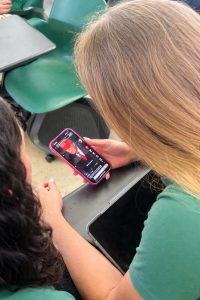
Still, not all perspectives are negative. Some students report that social media increases political exposure in ways traditional media does not.
“More influencers are getting into politics, and it comes into my algorithm, which gives me exposure that I wouldn’t otherwise have,” said freshman Sajhar Amaro.
While Dr. Brogan acknowledged that this increased exposure can be beneficial, she also emphasized that it must be paired with deeper understanding .
“Awareness is valuable, but without context and critical thinking, it can lead to a fragmented or distorted understanding of complex issues,” she said.
As social media continues to shape how young people interact with the world, its influence on political understanding remains a topic of discussion among educators, students, and experts. While these platforms offer access to information, they also require users to navigate a space where not everything is as accurate – or as complete – as it may seem.
For more information about social media’s impact on teens, check out these links.
“10 Facts About Teens and Social Media.” Pew Research Center, 10 July 2025,
https://www.pewresearch.org/short-reads/2025/07/10/10-facts-about-teens-and-social-media/.
“Stanford Study Shows Students Have Trouble Distinguishing Fake News.” Glamour,
https://www.glamour.com/story/stanford-study-students-real-fake-news.