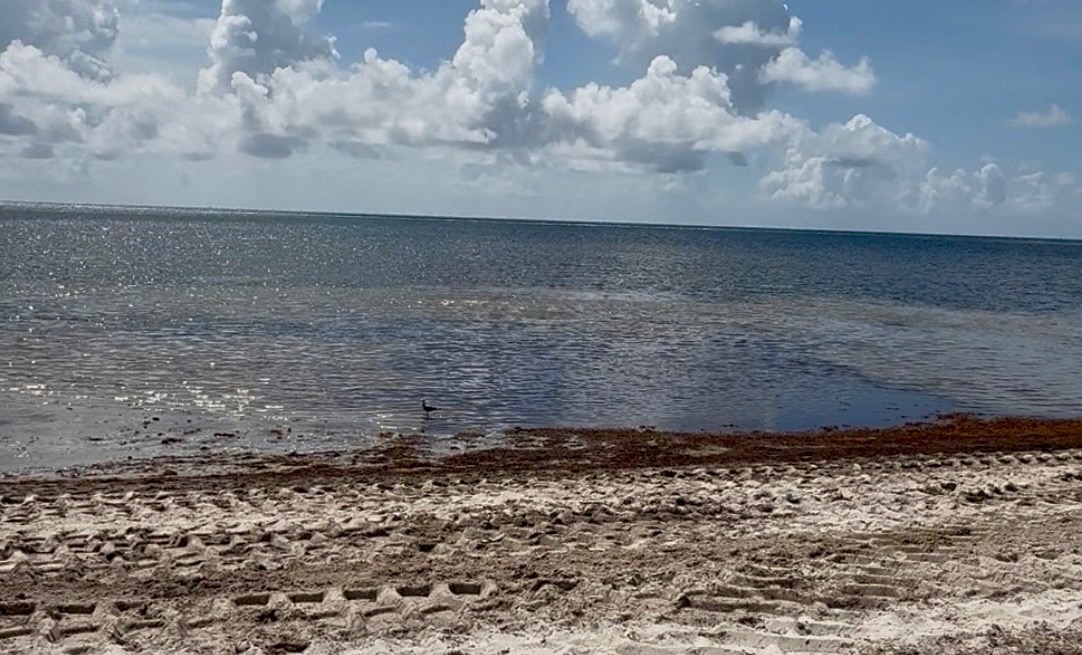
Every year, large amounts of seaweed called sargassum wash up on the beaches of Miami as well as in different other places like Mexico. They normally appear during the summer and after they aren’t that common. Even though sargassum is a natural part of the ocean ecosystem, huge piles of it can become a problem when they reach the shore.
Sargassum is a type of brown seaweed that floats on the surface of the ocean. It provides food and shelter for many small marine animals. However, when large amounts collect near beaches, they can wash onto the sand and begin to decompose.
As the seaweed rots, it makes a strong smell similar to rotten eggs. This happens because decomposing sargassum can produce hydrogen sulfide gas. The smell can be more noticeable on hot days, when the seaweed breaks down faster. This smell can make tourists and visitors want to not go which affects the local tourism economy.
Miami and other parts of South Florida have experienced sargassum events, especially during years when large amounts of seaweed are in the Atlantic and Caribbean. To get rid of it, people use tractors and other equipment to remove the seaweed from beaches. But even though they dispose of it, the seaweed comes back really fast.
Scientists keep track of sargassum using satellites and other tools to track large floating areas in the ocean. While sargassum is important for marine life, a big amounts on beaches can create bad odors which interfere with tourism/vacation and are also dangerous for sea animals.
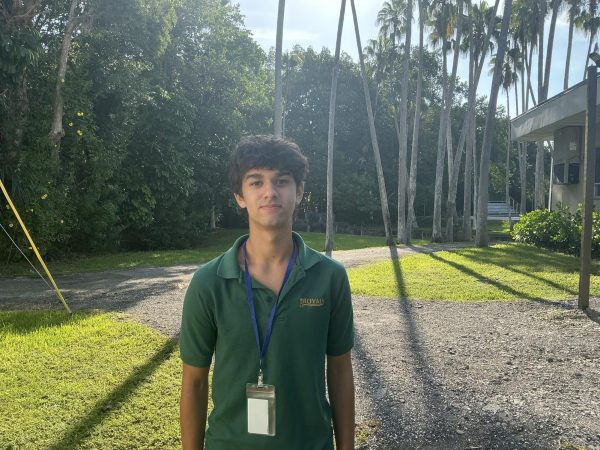
Alejandro Féria, a junior who recently visited Key Biscayne said, “The odor was really bad that it made me want to leave.”
Santiago Garcia Palau, a Key Biscayne resident had similar opinions. “It was a terrible smell. I hope the smell goes away soon so I can go to the beach already.”
For Miami, the challenge is finding a balance between protecting the natural environment and keeping beaches clean and enjoyable for visitors.