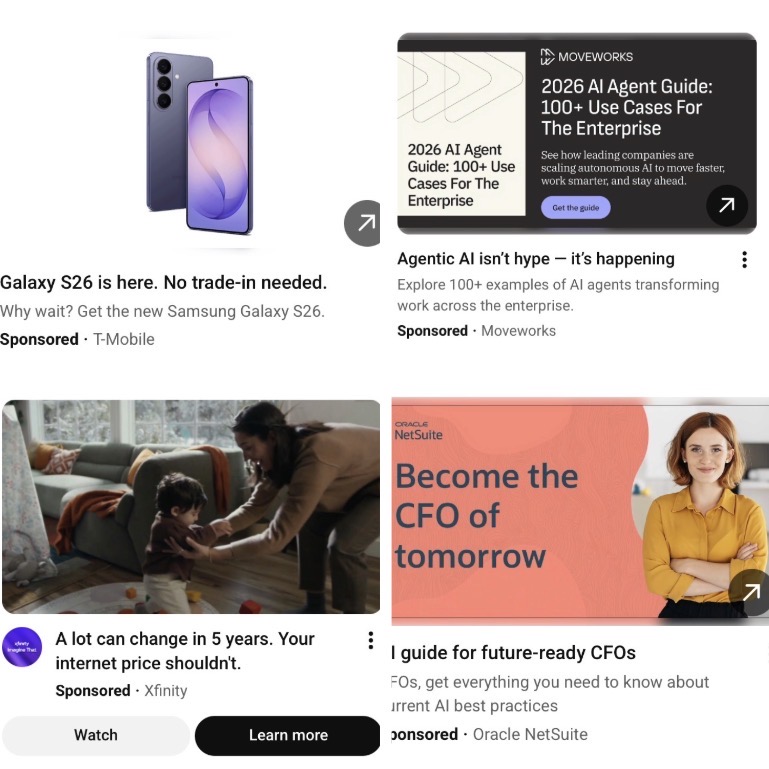
In the beginning, advertisement was something you could distinguish easily; it was simple and straightforward. Nowadays, it seems like there’s an ad embedded in almost everything whether it’s entertainment or billboards on every corner.
Interestingly enough, ads have existed for thousands of years as Ancient Egyptians started using papyrus posters and wall signs to sell goods. Later on Ancient Romans began painting advertisements, starting the visual appeal that has turned into modern-day marketing. During the Industrial Revolution, mass production led to companies needing to attract large numbers of people to buy their goods. This form of advertising was direct, usually saying “buy this shoe” or “visit this store.” Later on, brands began using emotional appeals and slogans to stand out in the newfound busy markets.
“I thought ads were a reality of the 20th century. It’s interesting to know that like many things, it comes from the Ancient Egyptians,” shared junior Maria Alonso.
Only 40 years ago, in the 1980s in particular, commercials were still separate from daily lives. People knew when they were being advertised to. Ads mostly tended to appear in magazines, radio, or TV, making them not easy to escape if you chose to be on those platforms as there was no such thing as fast-forwarding through the advertisements. As the digital age came to be, algorithms began pushing ads and now it seems that everyone wants to sell you something. Now that Influencers are on every corner, brands have taken advantage of the hold social media has on daily life. Algorithms and personal data are used to create users the perfect ad to hold attention for as long as possible. Influencers now turn their relationships and personalities into branded content. People themselves become ads, feeling the pressure to market not only products but also themselves. It’s a lifestyle.
“It truly feels like everything is an ad nowadays. I don’t like it. Every corner I turn there’s a person or poster trying to sell me a product I don’t even need,” shared junior Ashley Gomez.
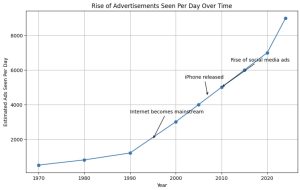
Where a product is placed, the language a video uses, and trends started by brands are all new ways brands market to customers. The newest method is “core culture,” where corporations pretend to be relatable using language, and it works. Brands will posts memes and out of pocket videos in the hope of drawing new customers to their overpriced products. These new forms of modern advertisement succeed not when noticed but when they are mistaken for culture.
“I’ve noticed that brands in comment sections are trying hard to relate to not just adults but even youth. It’s concerning,” shared junior Sophie Yetming.
The consequences of this new age are already coming to light, and no one knows what’s real anymore. It is slowly realized that the people worshipped online are not as authentic as users may believe, leading to the question: Can authenticity survive being monetized? Advertisement now no longer interrupts life; it becomes it.