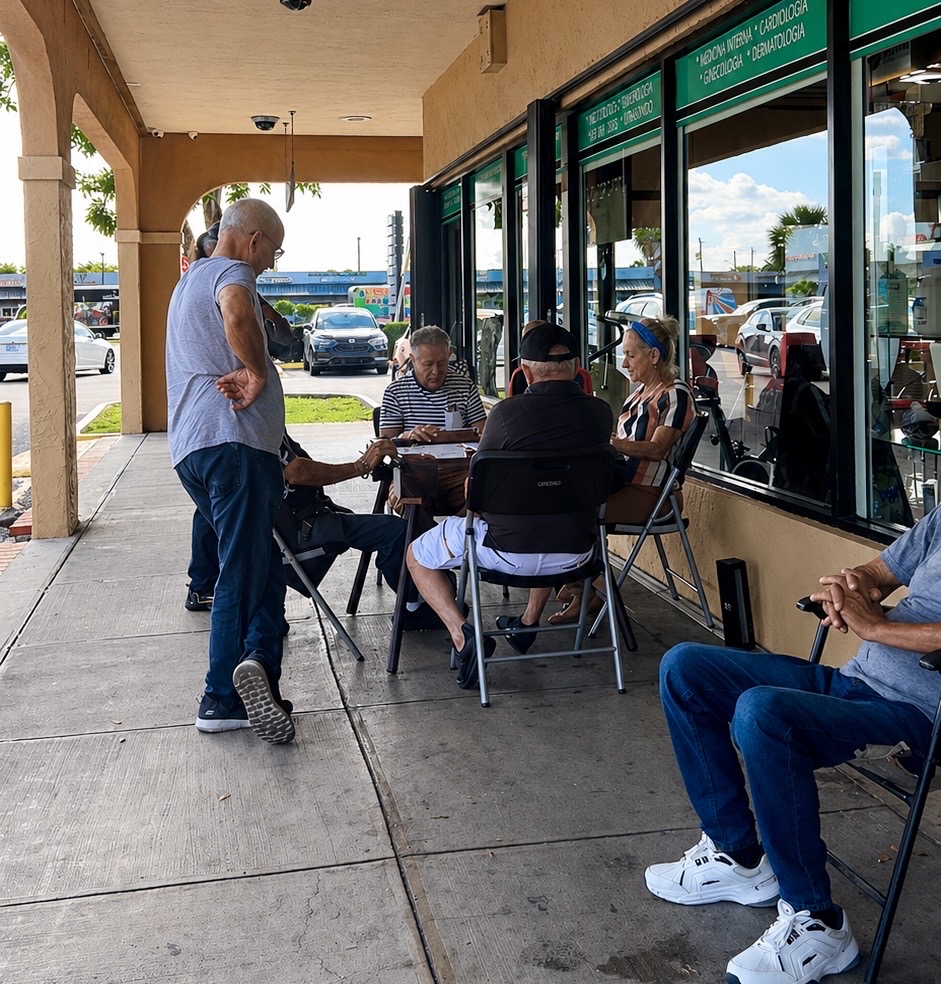
If you are Hispanic, or even if you aren’t, you probably recognize this table. And for some, it might look like a simple small square, but for Cubans, this isn’t just a domino table—it is a symbol of identity and tradition.
Cuba in Context
Cuba is currently living through the worst economic and humanitarian crisis they have ever experienced after decades of existing lead by its communist dictatorship. In 2021, Miguel Díaz-Canel succeeded Raúl Castro as head of the Communist Party, becoming the first leader since 1959 who was not a Castro, though his tenure has been marked by crises. As of April 2026, Cuba has faced daily nationwide blackouts and having to ration all supplies due to a huge fuel shortage because of U.S. conflicts in Iran.
“I would love to go back to Cuba, but it would be unsafe for me to,” said Gregorio Diaz, a 34-year-old immigrant from Cuba.
Identity
Even with Cuba’s complicated and devastating history, Cubans have shown resilience through playing this game. It shows that even when life gets rough, they can’t take away who they are. Because being Cuban doesn’t mean living in a place that is “poor and sad”—it means being from a place where there is unity among its people.
“Being Cuban is who I am,” said Carlos Perez, a 72-year-old immigrant and grandparent.
It Brings People Together
Growing up with my dad owning a Cuban restaurant, and my dad’s whole side of our family being Cuban, and my mom’s side being Dominican, I saw this table hundreds of times. I have heard countless stories at that very table. Even now that my family is older, whenever my dad’s friends from back home in Cuba come over, they can always come back to the game of dominos. This game brings people together from all backgrounds.
“Cuba for me is my home, and I want to share it with my family,” said Faisal Hamud, a Cuban immigrant and parent.
Tradition
Dominos is a game that has been passed down from generation to generation of Cubans. From my great-grandpa showing it to my grandpa, and my dad showing it to me, this game is a tradition embedded in our Cuban heritage. Even though my dad and many other families were forced to leave their homes, they share with us, the next generation, how to keep this tradition alive.
As you can see, the dominos table isn’t just a little table—it’s a symbol of identity and tradition for Cubans. It serves as a symbol of light in the darkness and has brought together Cubans of all ages. So if you ever see a group of people playing dominos, appreciate how something as simple as a game of dominos can mean so much more.
According to Google AI, dominoes became popular in Cuba as a deeply ingrained cultural tradition passed down through generations, originally introduced by Spanish settlers. It evolved into a key social activity for camaraderie, bonding, and friendly competition, played on streets and in homes, serving as a vital connection to heritage for the Cuban diaspora.