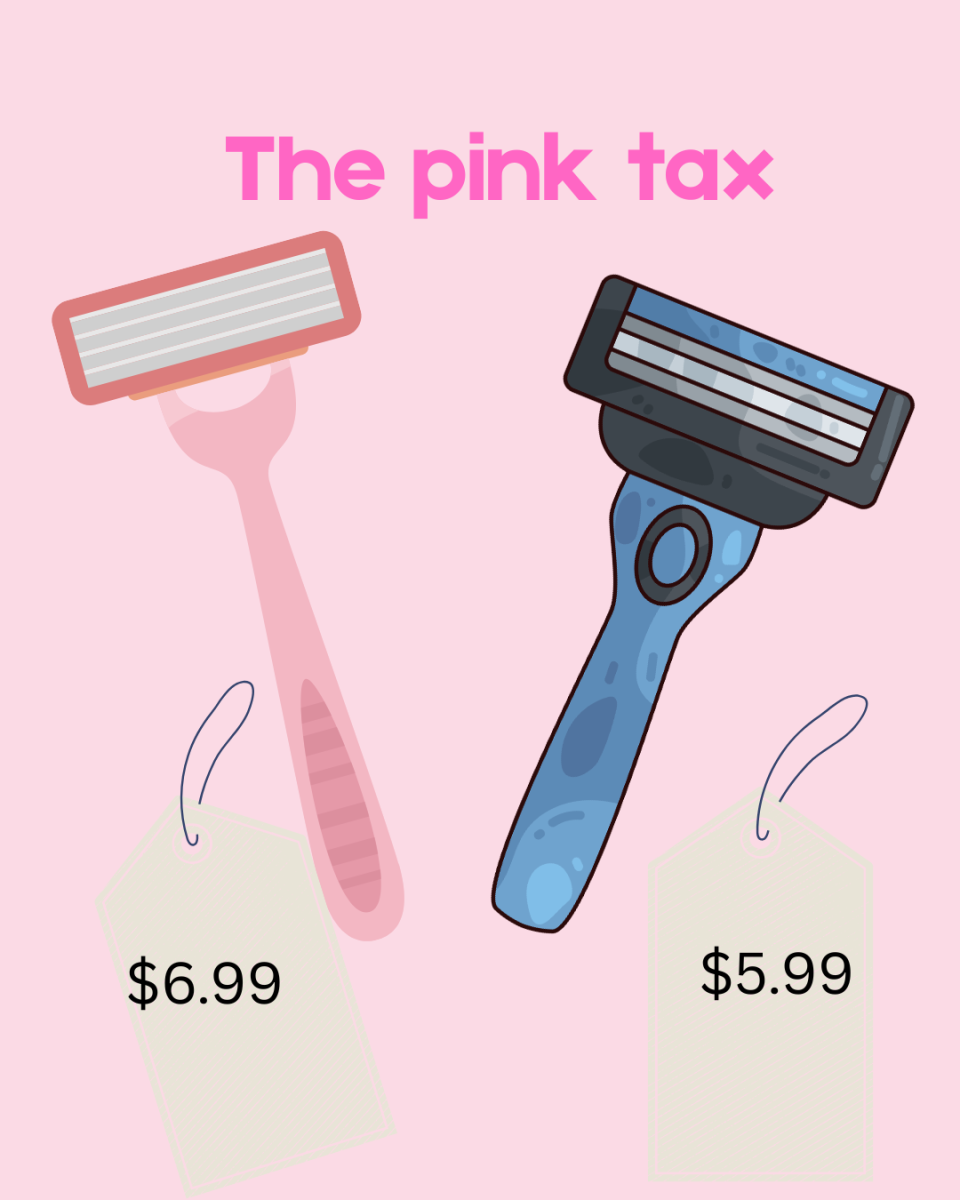
Have you ever been to the store and noticed that a product marketed towards women costs more compared to one marketed towards men? That’s not an accident; that’s the pink tax. These price increases are on everyday items, from razors, deodorant, shampoo, and even clothing. They are all increased when it’s “for women.”
“From dry cleaning to haircuts to deodorant, women often pay more than men for the same goods and services.” – Former Secretary of State, Ms. Hillary Clinton.
Why? Well, there are a few reasons, starting with price sensitivity. Some people suggest that women are less price sensitive for products seen as necessities. This makes it so companies feel they can charge more because they know that women are more likely to buy the product, even if it’s more expensive, because it’s a necessity.
“I feel like basic things are so expensive for no reason,” said freshman Lucia Garcia.
Once there was actually a “ tampon tax“ targeting menstrual cycle products because they are considered a “ luxury “ item. As of early 2026, more than 30 states officially repealed the this tax.
Social expectations. Women have more expectations than men to keep up their looks. Women often face higher social and professional pressure to maintain a specific appearance. This leads to companies exploiting their prices, knowing that women will buy them to keep up with social norms.
How does this affect women over time? Women spend an average of $2,000 more a year for the same products that are nearly identical to products marketed towards men. And women pay over $200,000 across their whole lives. This is money that can’t be put into savings or used for anything else.
“It’s insane how much money we spend, ” said Mrs. Maria Chavez, an ILS parent.
How can you avoid it? Well, even though it’s hard, there are ways you can bypass the higher pricing. Start with ignoring products that are specifically marketed towards women. One way is taking a look at the men’s aisle. In personal care items, really the only difference is the scent. For items like razors, the product is often more durable and significantly better in price. Another thing you could do is shop for neutral products labeled as “unisex.”
What has been done about it? Well, there haven’t been any federal acts, but there have been several state ones. New York was one of the first states to implement an actual ban on the pink tax, making it illegal to charge different prices for “substantially similar” goods and services based on gender.
California also enacted a similar law (the Gender Tax Repeal Act), which initially prohibited gender-based pricing for services (like dry cleaning and haircuts) and was later expanded to cover consumer goods. Other states have taken action as well.
The pink tax affects all women in many areas—from clothes, menstrual products, and personal care items. But women can try to avoid these price hikes by taking a closer look at their potential purchases. Let’s make it so that in the world of tomorrow, we can live in a world where simply being a woman doesn’t cost more.