
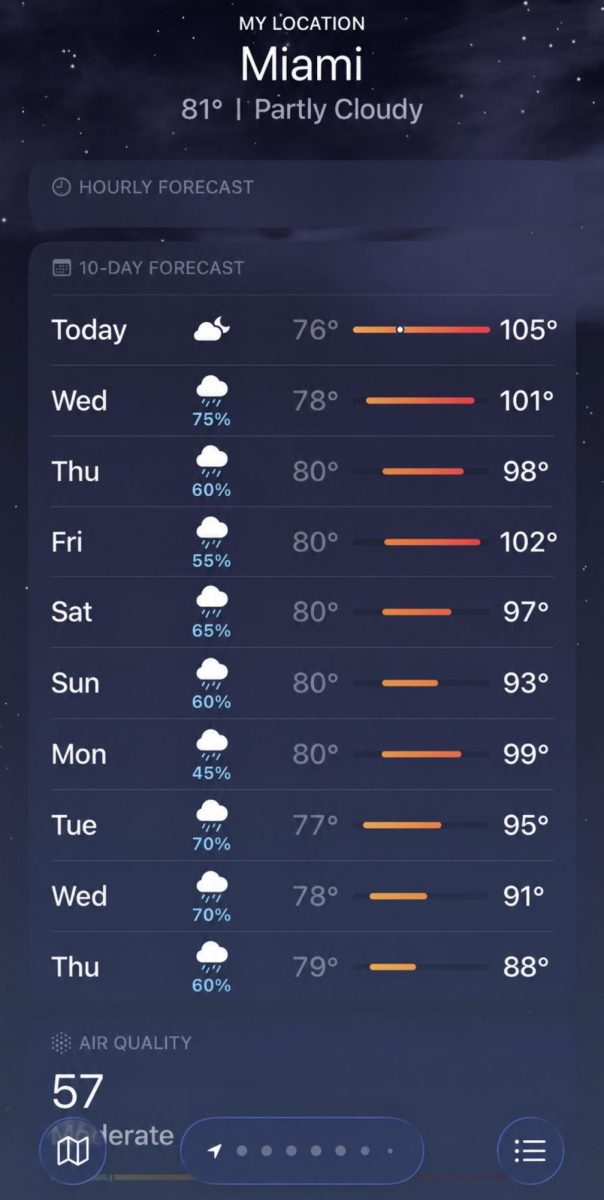
Miami residents have faced intense heat this summer with temperatures and “feels-like” readings reaching dangerous levels. On Aug. 18, Miami International Airport reached 100 degrees Fahrenheit for only the second time in recorded history. The National Weather Service described the summer in South Florida as extremely hot and much drier than usual.
“It’s been another hot and dry day across South Florida with above average heat and ample sunshine,” said junior Liam Dempsey.
Several weather conditions have combined to push temperatures higher. A strong high-pressure system over the Gulf sent west winds across South Florida. As those winds traveled over hot land, they warmed before reaching Miami. Saharan dust also reduced thunderstorms and cloud cover, while west winds weakened the cooling Atlantic sea breeze that normally helps keep coastal Miami cooler.
“All the ingredients are there for record heat across South Florida and the rest of the peninsula,” said senior Ozvaldo Ozon.
Humidity makes Miami’s extreme temperatures even harder to handle. The heat index combines the actual air temperature with relative humidity to estimate how hot conditions feel to the human body. On Sept. 8, Miami International Airport reported 90 degrees with a heat index of 101 degrees, according to the National Weather Service.
“The Heat Index is a measure of how hot it really feels when relative humidity is factored in,” explained senior Maria Carroll.
Miami’s buildings and roads can also increase temperatures. Research supported by NOAA found that some areas around Miami-Dade recorded maximum temperatures about six degrees higher than the airport. Pavement, roads, and buildings absorb heat from the sun during the day and slowly release it, creating what scientists call an urban heat island.
With high temperatures continuing into September, Miami residents should drink plenty of water, find shade or air conditioning, and avoid strenuous outdoor activities during the hottest hours. These precautions can help residents stay safer as unusually high temperatures continue affecting South Florida throughout the late summer season.