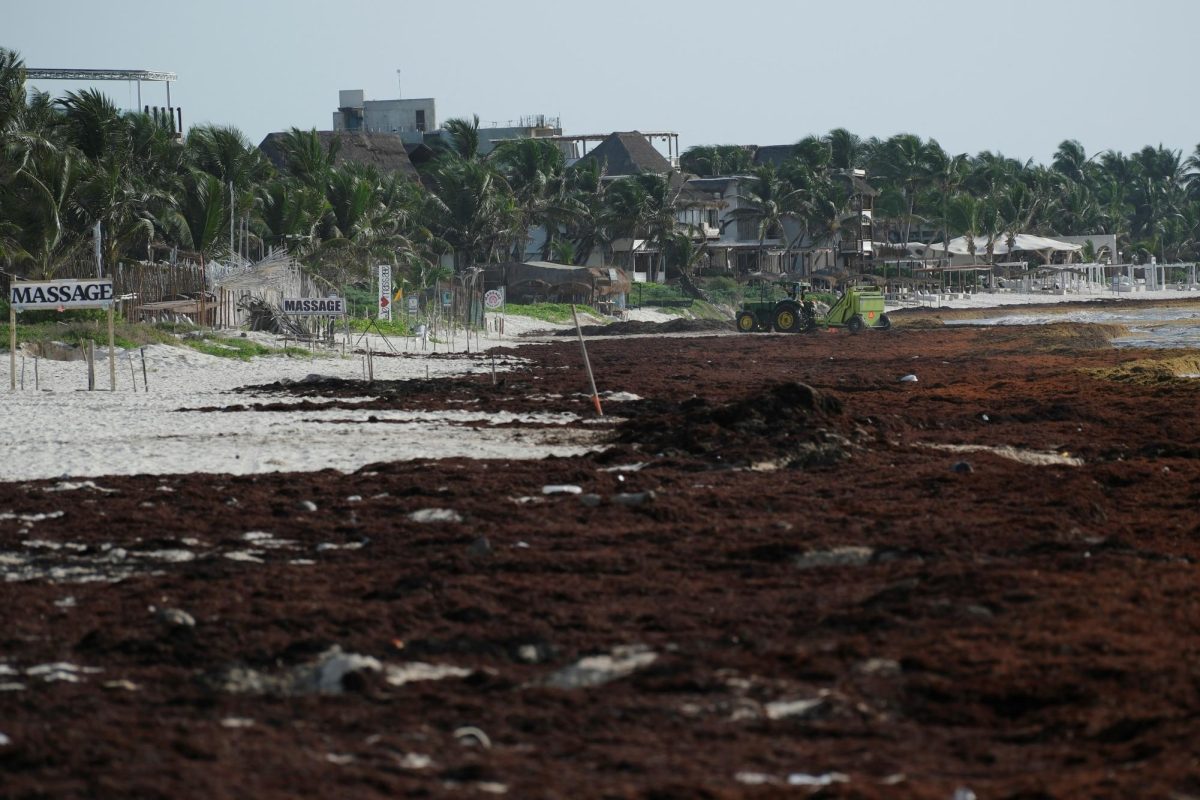
Along Florida’s costs, there is a rise of seaweed that has changed beautiful beaches into thick, brown gatherings of decomposing plants. Driven by warming ocean temperatures and nutrient runoff, huge Atlantic Ocean blooms are constantly heading to shore, turning field trips and beach hangouts into environmental lessons.
“I used to volunteer at an aquatic camp and the water was always nice. But now it is just full of stinky seaweed.” said ILS senior Camila Echeverri. “
While floating in the ocean, Sargassum (seaweed) serves as a sanctuary for animals such as sea turtles and more. However, once it gets to the shoreline, it creates environmental damage. Thick layers block sunlight from reaching seagrass below, while decaying ocean matter takes away dissolved oxygen, trapping and suffocating fish.
“I go to the beach often but lately with the seaweed it is uncomfortable to swim in the ocean, and it smells horrible,” said ILS senior Maria Nordholz. “It’s also sad to see how the animals are suffering due to this phenomenon. I’ve found many hurt animals such as dead hatchlings who got trapped under the surface.”
Beyond the environmental issues, the seaweed brings consequences for humans, too. While touching the plants themselves isn’t dangerous, Sargassum can trap sea lice and jellyfish larvae that cause skin irritation upon contact. Moreover, as the piles rot under the sun, they release hydrogen sulfide gas, which creates a potent rotten-egg smell.
“I drive to school and every time I park in the Bay lot I smell that terrible odor. I hope that it goes away as fast as possible because it has started giving me headaches,” stated ILS senior Sophie Yetming.
As global ocean temperatures rise, more and more seaweed will continue to amass near land with no end in sight.